I still remember the Tuesday night that changed my dinner game forever. My phone buzzed with a text from my best friend: "Bet you can't make a restaurant-quality pasta in under an hour." Challenge accepted. Fast forward forty-five minutes and I was standing at the stove, spoon raised like a victory flag, convinced I'd just cracked some secret culinary code. The sauce coating each noodle looked like liquid velvet, the chicken had those golden edges that shatter like thin ice, and the smell—oh, the smell—had my neighbors knocking to ask if I was running an underground trattoria.
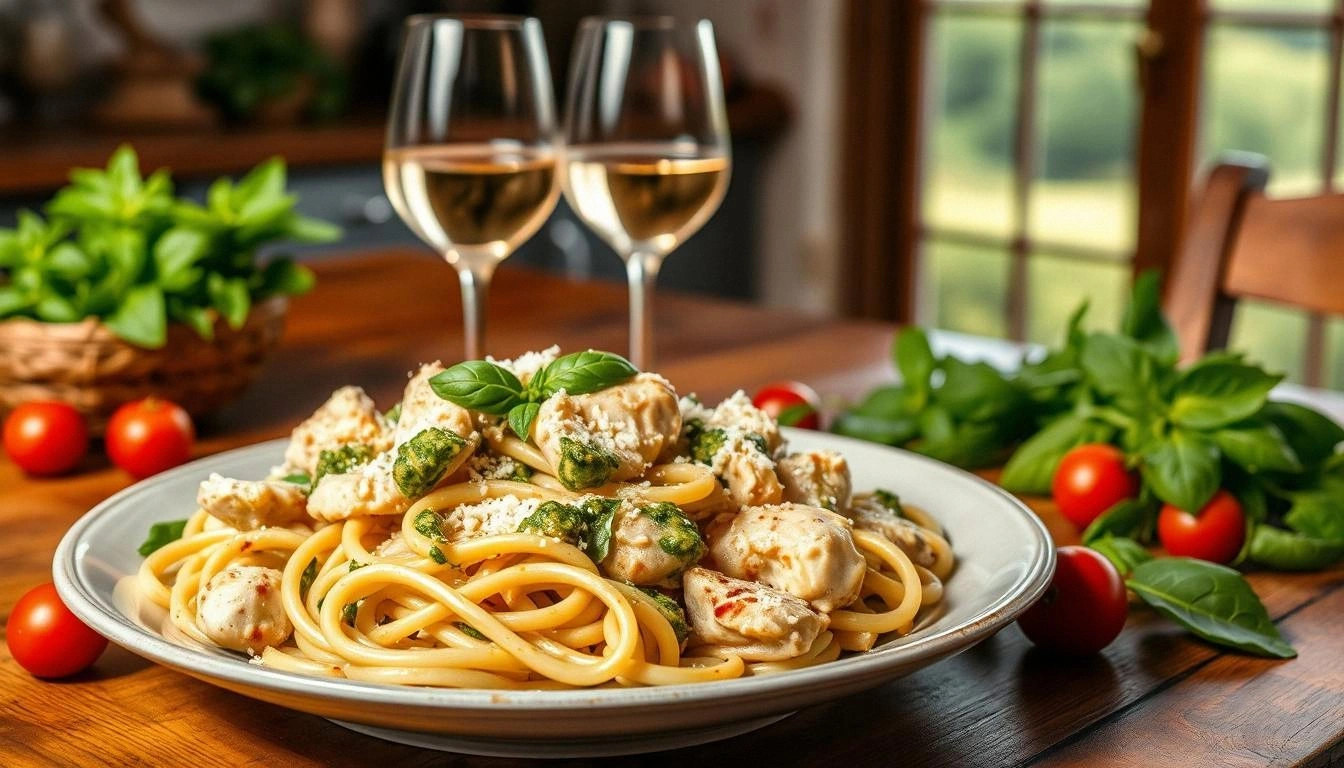
That impromptu throw-down produced what I now call the only creamy chicken pesto pasta worth making on repeat. Most versions land somewhere between "soupy mess" and "pesto who?" but this one balances creaminess with bright basil, savory chicken with a garlicky punch, and silky sauce with al dente pasta that actually stays al dente. I dare you to taste this and not go back for seconds; I certainly failed that challenge, polishing off half the skillet before my friend even arrived for the victory lap.
Picture yourself pulling this out of the oven, the whole kitchen smelling incredible, steam curling off the noodles as you grate fresh Parm right into the pan. That sizzle when the cream hits the hot garlic? Absolute perfection. The best part: you don't need a culinary degree, fancy gear, or sun-dried tomatoes with names I can't pronounce. You need one cutting board, one skillet, one pot, and the willingness to follow a few deceptively simple moves that turn everyday groceries into a plate that feels like a Friday-night splurge.
Let me walk you through every single step—by the end, you'll wonder how you ever made it any other way.
What Makes This Version Stand Out
Velvet-Cream Balance: We bloom the pesto in a little butter first, waking up the basil oils, then introduce just enough cream to hug the noodles without drowning the herb flavor. The result is sauce that coats pasta like silk, not wallpaper paste.
Flash-Fried Chicken Bites: Instead of grilling and slicing, we cube the chicken, toss it with seasoned flour, and give it a quick sizzling sear. Crispy edges, juicy centers, and every nook grabs sauce.
One-Pot Noodle Trick: Cook the pasta in the same creamy broth that later becomes sauce; the starch thickens everything naturally and you get built-in flavor layers.
Fresh Lemon Zip: A whisper of zest at the end lifts the richness like culinary helium. Most recipes skip acid and wonder why the dish tastes flat.
Five-Ingredient Wow Factor: Eight pantry staples plus salt and pepper. That's it. Simplicity means each flavor sings instead of fighting for the mic.
Leftover Love: The sauce reheats without breaking, so Monday's lunch tastes like Saturday's dinner. Meal-prep heroes, rejoice.
Alright, let's break down exactly what goes into this masterpiece...
Inside the Ingredient List
The Flavor Base
Extra-Virgin Olive Oil: Your pesto rides on its shoulders. Choose something fruity, not bitter—taste it plain; if you cough, save that bottle for sautéing and grab a milder one here. The oil carries basil's perfume and keeps garlic from scorching.
Garlic Cloves: Fresh only. The pre-minced jarred stuff tastes like regret and wet gym socks. Smash, peel, and mince just before cooking; allicin (the punchy compound) starts fading the moment it's cut.
Basil Pesto: Homemade if your garden exploded, but a good refrigerated brand works. Check the label: pine nuts, basil, Parm, oil, salt—no random gums. The tub stuff beats shelf-stable jars every time because it hasn't been heat-treated into gray paste.
The Texture Crew
Heavy Cream: Accept no substitutes below 36 % fat. Lighter creams curdle faster than my motivation on a Monday. Cold cream hits hot garlic-butter slower, preventing oily separation.
Chicken Breast: Go medium, not mammoth. Those 1-pound Frankenchickens cook unevenly; two 8-oz pieces dice and brown evenly. Pat them bone-dry; moisture is the enemy of Maillard browning.
Pasta: I camp hard for rotini or fusilli—ridges grab sauce like Velcro. Penne is acceptable in emergencies. Skip spaghetti unless you enjoy slurping creamy shoelaces.
The Unexpected Star
Lemon Zest: Micro-plane just the yellow, not the bitter pith. The zest's oils contain limonene, which binds with cream and basil to make the dish taste three-dimensional. Skip it and everything sits heavier on the palate.
Reserved Pasta Water: Liquid gold. Cloudy with starch, lightly salted, it thins sauce without watering down flavor. Keep a mug by the colander; you'll use more than you think.
The Final Flourish
Fresh Parmesan: Buy a wedge and grate it yourself. Pre-shredded cellulose keeps shreds from clumping, but it also keeps them from melting smoothly. A vegetable peeler makes gorgeous Parm ribbons for garnish.
Black Pepper: Crack it right before serving; volatile terpenes vanish quickly. The gentle heat contrasts cream and echoes basil's subtle spice.
Everything's prepped? Good. Let's get into the real action...
The Method — Step by Step
Bring a large pot of water to a rolling boil. Salt it until it tastes like the sea—this is your only chance to season the pasta itself. Add a fistful of kosher salt, stir until dissolved, then taste; it should make you think of beach vacations, not a bland bathtub. While the water heats, dice the chicken into ¾-inch cubes, season with ½ tsp salt and ¼ tsp pepper, then dust with 2 tsp flour; toss until each piece looks lightly frosted. The flour creates a micro-coating that turns golden and helps sauce cling later.
Heat a deep skillet or sauté pan over medium-high and film it with 2 Tbsp olive oil. When the surface shimmers like a mirage, spread the chicken in a single layer—no crowding or they'll steam. Let them sizzle undisturbed for 2 minutes; those crispy edges develop only through patient contact. Flip with tongs, cook another 90 seconds, then transfer to a warm plate. They'll finish cooking later, so pale centers are fine here.
Drop the pasta into the boiling water and set a timer for two minutes less than package directions. Meanwhile, lower the skillet to medium, add 1 Tbsp butter, and swirl until it foams. Stir in minced garlic for 30 seconds; you're looking for fragrant bubbles, not brown. Scoop in 3 Tbsp pesto, mash it into the garlic-butter, and let the basil oils bloom for another 30 seconds. Your kitchen will smell like summer in Liguria; enjoy that aromatherapy.
OK, ready for the game-changer? Ladle in 1 cup of that starchy pasta water and ¾ cup cold heavy cream. The temperature contrast prevents curdling and starts a gentle thickening. Whisk until the mixture turns a pale, milky green—think matcha latte. When the pasta timer beeps, use a spider or tongs to transfer noodles straight into the skillet; starchy water clinging to them helps build body. Stir, coating every curve with creamy pesto.
Add the par-cooked chicken, nestling pieces between noodles. Reduce heat to low and simmer for 3–4 minutes, stirring often. The sauce will tighten and gloss like a professional lacquer. If it looks gloppy, splash in another ¼ cup pasta water; pasta keeps drinking, so saucier is safer. Taste a noodle—it should still have chew, and the sauce should cling without pooling. Season with a pinch of salt, lots of cracked pepper, and half the lemon zest. Stir once more, then kill the heat.
And now the fun part. Sprinkle in half the Parmesan and toss vigorously; the heat melts it into stretchy strands. Add the remaining cheese on top just before serving so you get little salty pockets. Shower with the rest of the lemon zest and a final crack of pepper. Serve directly from the skillet (rustic chic) or twirl into warmed bowls using a carving fork and spoon to create those lofty pasta nests you see on magazine covers.
Call everyone to the table immediately. Creamy sauces wait for no one; they thicken as they cool. Garnish with basil ribbons if you want to flex your basic knife skills, then sit back and bask in the silence that only happens when people are too busy inhaling dinner to talk.
That's it—you did it. But hold on, I've got a few more tricks that'll take this to another level...
Insider Tricks for Flawless Results
The Temperature Rule Nobody Follows
Keep the cream cold and the pasta water hot. When cold cream hits a hot, garlicky base it warms gradually, giving proteins time to bind rather than scramble. Room-temp cream races to a boil and splits faster than a bad high-school band. If you forget and leave the cream on the counter, stick the measuring cup in a bowl of ice water for five minutes—problem solved.
Why Your Nose Knows Best
Aromas are your built-in kitchen timer. When the pesto-butter smells like toasted nuts and fresh-cut grass at the same time, it's ready for liquid. If the garlic hits you with raw heat, keep stirring; if it smells bitter and brown, you've overshot and need to lower the heat. Trust those olfactory neurons—they predate stainless steel by millennia.
The 5-Minute Rest That Changes Everything
Once the pasta reaches perfect al dente, turn off the burner and let the skillet sit, uncovered, for five minutes. During this magic window, starch granules finish swelling while flavors meld, and the sauce relaxes from aggressively hot to luxuriously clingy. A friend tried skipping this step once—let's just say it didn't end well; the sauce slid off the noodles like a toddler avoiding bedtime.
Cheese Timing for Maximum Oomph
Add Parmesan in two waves: half while the pan is still on low heat so it melts into the sauce body, and the rest just before serving so you get tiny molten pockets. All at once and you lose both proper emulsification and those delightful cheesy landmines that make forkfuls exciting.
Fresh Herb Finish vs. Early Addition
Basil pesto already went into the hot base, so save fresh basil leaves for a raw garnish on top. Heat dulls green chlorophyll and aromatic oils; a last-minute chiffonade keeps things bright and springy. If you only have dried basil, skip it—dried tastes like dusty hay and will haunt your leftovers.
Creative Twists and Variations
This recipe is a playground. Here are some of my favorite ways to switch things up:
Sun-Dried Tomato & Spinach Remix
Stir in a handful of julienned sun-dried tomatoes and baby spinach during the last minute of simmering. Tomatoes add tangy umami chew, while spinach wilts into silky ribbons that make you feel virtuous about cream-based dinner.
Spicy Calabrian Chili Pop
Swap the cracked black pepper for a spoon of chopped Calabrian chilies in oil. They bring smoky heat that blooms slowly, letting basil and cream cool things down just enough to keep you coming back for more punishment.
Shrimp Swap-Out
Use peeled shrimp instead of chicken. Sear them just 45 seconds per side—they finish cooking in the sauce and lend briny sweetness that plays beautifully with lemon zest. Add a pinch of red-pepper flakes for seaside personality.
Vegetarian Powerhouse
Trade chicken for roasted cauliflower florets and toasted pine nuts. The cauliflower's caramelized edges soak up sauce like little sponges, while pine nuts echo pesto's nutty backbone. Even carnivores clean the skillet.
Smoked Mozzarella Indulgence
Replace half the Parmesan with smoked mozzarella cubes stirred in off-heat. They melt into gooey pockets that stretch Instagram-style when you lift a forkful. A drizzle of balsamic glaze at the end seals the fancy-pants deal.
Spring Veggie Confetti
Add blanched asparagus tips and fresh peas right before serving for pops of color and sweetness. The vegetables warm through in the hot sauce without turning army-green, keeping everything perky and seasonal.
Storing and Bringing It Back to Life
Fridge Storage
Transfer cooled pasta to an airtight container and refrigerate up to 4 days. Press a sheet of plastic wrap directly onto the surface to prevent the sauce from absorbing fridge odors. Let the container come to room temp for 15 minutes before reheating; shocking cold cream in a hot pan encourages separation.
Freezer Friendly
Portion into freezer bags, squeeze out excess air, and freeze flat for up to 2 months. Thaw overnight in the fridge—do not microwave from frozen unless you enjoy grainy dairy. Once thawed, the sauce may look slightly broken; a splash of milk and gentle stirring restores silkiness.
Best Reheating Method
Warm a non-stick skillet over low heat, add the pasta, and drizzle in 2 Tbsp milk or chicken stock. Cover for 2 minutes so the bottom doesn't scorch, then toss until hot. Add a tiny splash of water before reheating—it steams back to perfection and keeps noodles supple, not gummy. Microwave works in a pinch: 50 % power, 30-second bursts, stirring between each until steamy.