Picture this: it's a sweltering Thursday evening, I'm still in my work clothes, and I've got twenty minutes to turn a crisper drawer full of vegetables into something that won't make my dinner guests politely excuse themselves to "check on the babysitter." I'd promised them a salad, but not just any salad — the kind that makes people forget they're eating vegetables at all. As I yanked out beets that looked like they'd been through a war zone and burrata so fresh it practically sang, I had one of those kitchen moments where everything clicks. The pine nuts were already toasting in the pan, sending out that buttery aroma that makes neighbors knock on your door with suspicious timing. What happened next was pure culinary alchemy: those humble beets transformed into silken, jewel-toned medallions, the burrata surrendered its creamy soul across the plate, and that balsamic reduction hit the pan with a sizzle that sounded like applause. My guests didn't just eat it — they scraped their plates clean and asked if I had more hidden somewhere. This, my friends, is not just another beet salad. This is the beet salad that converted beet-haters into beet-evangelists, the one that made my notoriously picky nephew request it for his birthday dinner instead of pizza. Let me walk you through every single step — by the end, you'll wonder how you ever made it any other way.
Most beet salads commit the cardinal sin of being boring. They're either too earthy, too mushy, or they taste like someone just threw raw vegetables at a plate and called it a day. I've weathered the storm of mediocre beet salads, from the ones that stain your teeth like a crime scene to those that taste like someone forgot to season them since the Clinton administration. This version? It's the Beyoncé of beet salads — stunning to look at, complex in ways that keep you coming back for more, and somehow both comforting and sophisticated at once. The secret lies in the interplay of temperatures, textures, and that magical moment when the warm beets meet the cool, milky burrata. That first bite is like watching fireworks — there's the initial sweetness of roasted beets, then the creamy richness of the cheese, followed by the crunch of toasted pine nuts, all tied together with balsamic that's been reduced until it moves like liquid velvet across your tongue.
I'll be honest — I ate half the batch before anyone else got to try it. Standing there in my kitchen, fork in hand, I told myself I was just "tasting for seasoning," but we both know that's chef-speak for "I can't stop shoving this in my face." The real magic happens when you let those roasted beets cool just enough to be warm but not hot, when the burrata is still holding its shape but ready to surrender at the touch of your fork. The pine nuts should be toasted until they're golden and fragrant, not a moment longer, or they'll turn bitter and ruin everything. And that balsamic reduction? We're not just drizzling store-bought vinegar here — we're transforming it into something that could make cardboard taste like dessert. The whole thing comes together in under an hour, but it tastes like something you'd pay twenty-five dollars for at that trendy restaurant downtown where the waiters wear aprons made from reclaimed denim.
Here's what really sets this apart from every other beet salad recipe cluttering up the internet: we're treating each component like it deserves its own spotlight. The beets get roasted with aromatics until they're candy-sweet, the pine nuts are toasted with a whisper of garlic, and the balsamic gets reduced with a secret ingredient that makes people ask, "What is that incredible flavor?" (Spoiler: it's a single bay leaf, but don't tell anyone I told you). Plus, I've figured out how to keep those beets from turning your entire salad into a crime scene — no more pink fingers or tie-dyed cutting boards. Okay, ready for the game-changer?
What Makes This Version Stand Out
Flavor Bomb: We're roasting those beets with orange peel, thyme, and a touch of honey, transforming them from earthy roots into candy-sweet jewels that practically glow on the plate. Most recipes just wrap them in foil and hope for the best, but we're building layers of flavor that make each bite taste like sunshine captured in vegetable form.
Texture Paradise: Silken burrata meets crunchy toasted pine nuts meets tender roasted beets in a three-way textural romance that'll make your mouth do a happy dance. It's like a symphony where every instrument knows exactly when to play — no mushy disasters or teeth-breaking catastrophes here.
Chef's Trick: That balsamic isn't just any reduction — it's been kissed with a bay leaf and finished with a pat of cold butter for a gloss that would make a magazine stylist weep with joy. This isn't the watery vinegar puddle you've suffered through before; this is liquid luxury that clings to every ingredient like it was meant to be there.
Crowd Control: I dare you to taste this and not go back for seconds. I've served this at dinner parties where people who "hate beets" suddenly become beet evangelists, cornering other guests to explain the error of their vegetable-hating ways. It's the salad equivalent of a cult classic film — once you experience it, you can't stop talking about it.
Time Wizard: While the beets roast, you're toasting nuts and reducing balsamic, making this a masterclass in kitchen multitasking. In 45 minutes, you'll produce something that tastes like it took all day, leaving you free to actually enjoy your dinner party instead of being trapped in the kitchen.
Make-Ahead Magic: Everything can be prepped ahead except the final assembly, making this perfect for entertaining. Roast the beets, toast the nuts, reduce the balsamic on Sunday, and you'll have restaurant-quality components ready to assemble faster than you can say "reservation for four."
Alright, let's break down exactly what goes into this masterpiece...
Inside the Ingredient List
The Foundation Crew
The beets are obviously the star here, but not just any beets will do. You want medium-sized ones — about the size of a tennis ball — because they roast evenly and slice into perfect rounds that look like edible stained glass. Skip the giant ones that taste like they've been growing since the Carter administration, and avoid the tiny ones that shrivel into nothing. When selecting, look for beets that feel heavy for their size with smooth, firm skin. If the greens are still attached (lucky you!), they should look perky, not like they've given up on life. And here's a confession: I once used pre-cooked beets from the grocery store in a pinch, and while it works, it's like listening to your favorite song through phone speakers — technically the same, but missing all the soul.
Burrata is the Beyoncé of cheeses — it needs no introduction, but I'll give it one anyway. This isn't just fresh mozzarella; it's mozzarella's more glamorous cousin who studied abroad in Italy and came back with stories and a creamy center that makes grown adults weep. When buying burrata, look for the freshest you can find — the cream should be loose and milky, not tight and rubbery. And please, for the love of all that's holy, don't substitute regular mozzarella. I know burrata costs more than your first car, but this isn't the place to economize. You're making a statement salad here, not packing lunch for a toddler.
The Crunch Factor
Pine nuts are the divas of the nut world — expensive, temperamental, but absolutely irreplaceable when you want that buttery, almost vanilla-like flavor that makes this salad sing. Buy them from a store with high turnover because rancid pine nuts will ruin your life and everything you love. Toast them in a dry pan until they smell like you're walking through a Mediterranean forest, but watch them like a hawk because they go from perfect to burnt faster than you can say "thirty-dollar mistake." If you absolutely must substitute (though I question your life choices), slivered almonds will work, but you'll lose that incredible creaminess that makes pine nuts special.
The Liquid Gold
Balsamic vinegar is where most recipes go completely wrong. They grab that watery grocery store stuff and expect it to transform into something magical. Here's what actually works: get a decent balsamic (look for one from Modena, aged at least 3 years), then reduce it with a bay leaf until it coats the back of a spoon like expensive chocolate sauce. The bay leaf adds this mysterious depth that makes people ask if you went to culinary school in Italy. When it's done, it should move like warm honey and taste like balsamic concentrated into its purest, most intense form. This isn't the time for white balsamic or apple cider vinegar — we're building flavor here, not making a science experiment.
The Flavor Amplifiers
Orange peel might seem like an odd addition, but trust me on this one. As the beets roast, the orange oils infuse them with a bright note that makes the whole dish taste like it's been kissed by Mediterranean sunshine. Use a vegetable peeler to get wide strips of orange zest — no white pith, which tastes like bitter disappointment. Fresh thyme adds an herby backbone that makes the beets taste more like themselves, like a good friend who brings out your best qualities. And that single bay leaf in the balsamic reduction? It's the secret handshake that makes this taste like something you'd get at a restaurant with white tablecloths and sommeliers who describe wine as having "notes of pencil shavings and regret."
Everything's prepped? Good. Let's get into the real action...
The Method — Step by Step
- Preheat your oven to 400°F, and while it's heating, scrub those beets like they owe you money. Cut off the greens (save them for a quick sauté later — don't you dare throw them away), and trim any long tails that look like they might snap off and cause chaos in your roasting pan. Toss the whole beets with olive oil, salt, and a whisper of honey — just enough to help them caramelize, not enough to make them taste like candy. Add strips of orange peel and a few sprigs of thyme, then wrap everything in foil like you're tucking in precious gems for a long nap. These beets are about to become something extraordinary, but they need their beauty sleep first.
- Slide your foil package onto a baking sheet (trust me, you don't want beet juice permanently tattooed on your oven floor) and roast for 35-45 minutes. The beets are done when a knife slides in like it's cutting through warm butter, but here's the key — they should still have some structure, not be mushy like they've given up on life. Let them cool just enough to handle, then rub off the skins with paper towels. This part feels oddly satisfying, like you're revealing hidden treasure. The skins slip off in messy sheets, revealing flesh so vibrant it looks fake, like nature's been showing off again.
- While the beets are doing their thing, it's time for the pine nuts. Heat a dry pan over medium heat and add the nuts in a single layer. Now, here's where most recipes get it wrong — they walk away, check Instagram, and come back to a pan of expensive charcoal. Stay with me here. Shake the pan every thirty seconds like you're nervous about something. When they start to smell like you're walking through an Italian forest and take on the lightest golden color, get them out of that pan faster than you'd leave a bad date. They'll keep cooking from residual heat, so err on the side of underdone.
- The balsamic reduction is where we separate the amateurs from the pros. Pour your balsamic into a small saucepan with a bay leaf and bring it to a gentle simmer. Don't let it boil like it's angry — just a lazy bubble that makes your kitchen smell like you've been transported to Modena. Stir occasionally with the devotion of someone who knows they're creating liquid gold. When it coats the back of a spoon and you can draw a line through it with your finger, whisk in a pat of cold butter. This isn't just for richness — it gives the reduction a gloss that makes food photographers weep with joy.
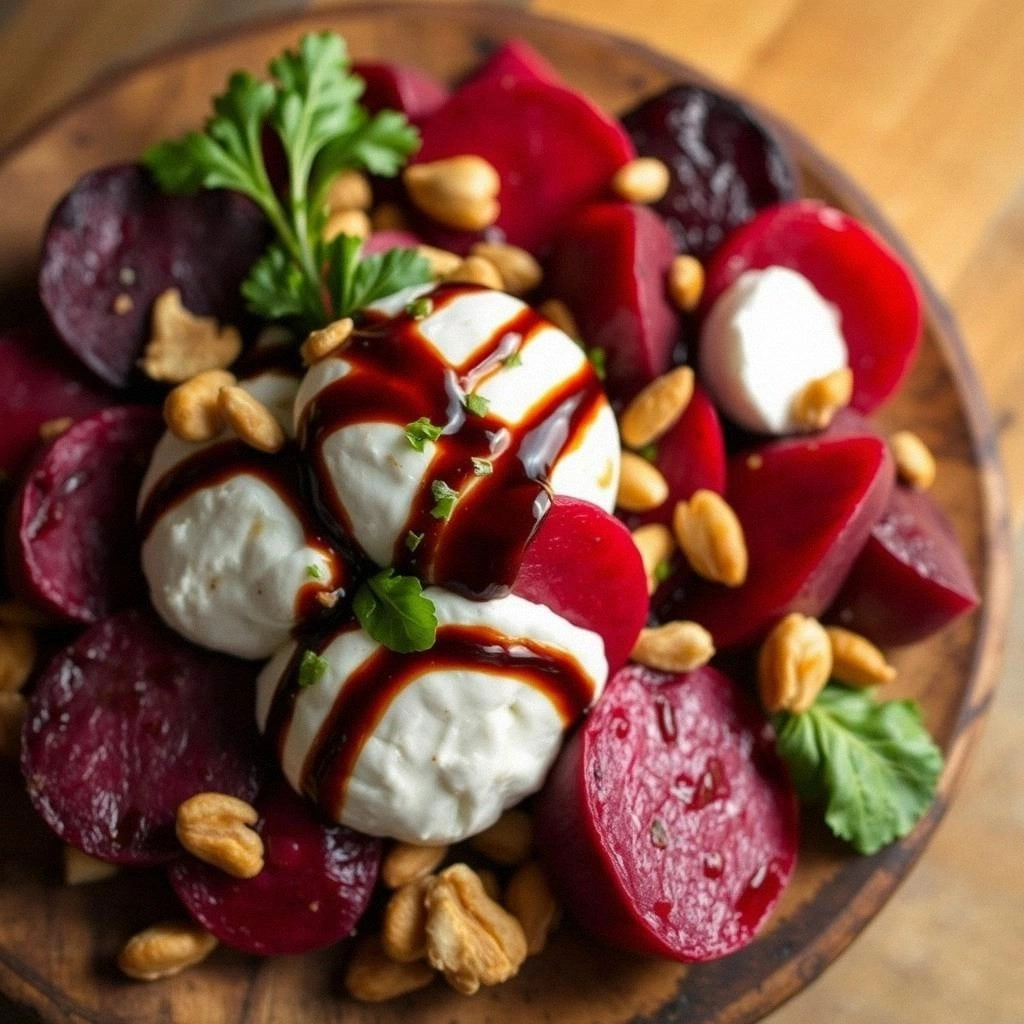
- Now for the moment of truth: slice those roasted beets into rounds about the thickness of a coin. Too thin and they'll fall apart like a bad alibi; too thick and they'll dominate every bite like that friend who won't stop talking about their CrossFit routine. Arrange them on a platter like you're creating edible art — overlapping slightly, showing off those gorgeous ruby edges. This is your canvas, and you're about to create a masterpiece.
- Carefully tear open that burrata like you're handling a newborn baby. The cream should spill out like liquid silk, and if it doesn't, you've been sold old burrata and you need to have words with your cheesemonger. Place it in the center of your beet arrangement, letting it sit there like a crown jewel waiting to be discovered. Don't try to make it perfect — the beauty of burrata is in its casual elegance, like it just happened to fall onto the plate looking gorgeous.
- Scatter those toasted pine nuts like you're Jackson Pollock with a culinary degree. They should land where they want to land, creating little nuggets of crunch that surprise and delight. Don't overthink this — if you find yourself arranging individual pine nuts with tweezers, you've gone too far and need to pour yourself a glass of wine immediately.
- The final flourish is where everything comes together. Drizzle that glossy balsamic reduction in a lazy zigzag across the entire creation, then finish with the best olive oil you can afford — we're talking the green, peppery stuff that makes you cough slightly when you taste it straight. A few flakes of sea salt, a grind of fresh pepper, and maybe some fresh thyme leaves if you're feeling fancy. This is the moment when you step back and realize you've created something that looks too beautiful to eat, but smells so incredible that you can't help yourself.
- Serve this beauty with crusty bread and watch what happens. The first person to dig in will break the burrata, and its creamy center will mingle with the beet juices and balsamic, creating a sauce that you'll want to bottle and sell. Someone will ask for the recipe. Someone else will ask if you cater. And you'll smile knowingly because you've just created the dish that will be requested at every gathering from now until the end of time. That's it — you did it. But hold on, I've got a few more tricks that'll take this to another level...
Insider Tricks for Flawless Results
The Temperature Rule Nobody Follows
Here's what separates restaurant-quality from home-kitchen disappointment: serve this salad when the beets are just warm, not hot, and the burrata is at room temperature. When beets are too hot, they turn the burrata into a puddle of sadness. Too cold, and they taste like yesterday's leftovers. The sweet spot is when you can hold a beet slice between your fingers for three seconds without saying words your grandmother wouldn't approve of. This temperature dance ensures the burrata stays intact but still softens enough to create that luscious cream when you break into it. A friend tried serving this with cold beets straight from the fridge once — let's just say it was like eating a salad made of rubber balls and disappointment.
Why Your Nose Knows Best
Trust your nose more than your timer when toasting pine nuts. They go from perfect to burnt faster than a vampire in sunlight, but your nose will tell you when they're ready before your eyes do. When they start releasing that buttery, almost vanilla-like aroma, get them off the heat immediately. They'll continue cooking from residual heat, so if they look perfectly golden in the pan, you've probably gone too far. I keep a plate next to the stove specifically for this purpose — the moment they smell like heaven, they get evacuated faster than a fire drill. And here's a confession: I've burnt more pine nuts than I care to admit, but each one taught me that lesson about paying attention to what matters.
The 5-Minute Rest That Changes Everything
After you roast the beets, let them rest in their foil package for exactly five minutes before peeling. This isn't just about avoiding burned fingers — the steam loosens the skins so they slip off like silk gloves, revealing flesh so vibrant it looks like it's been Photoshopped. Too short, and you'll be scraping at stubborn skin like you're trying to remove wallpaper. Too long, and they become waterlogged and lose that intense flavor we worked so hard to develop. Five minutes is the Goldilocks zone where everything is just right. Set a timer, pour yourself a glass of whatever you're drinking, and practice patience. Your future self will thank you when you're not cursing at beet fragments stuck to your fingernails.
The Salt Timing Secret
Season your beets with salt after roasting, not before. I know this goes against everything you've been taught about seasoning early, but hear me out. Salt draws out moisture, and during roasting, you want those beets to concentrate their flavors, not steam in their own juices. A light seasoning after peeling lets you control the salt level perfectly, and the salt hits your tongue directly rather than getting lost in cooking liquid. Plus, you'll be adding salty elements with the burrata and pine nuts, so starting with under-seasoned beets gives you more control over the final balance. This is one of those times when breaking the rules actually makes everything better, like wearing white after Labor Day or putting pineapple on pizza.
The Presentation Game-Changer
Use a white plate. I don't care if your grandmother's antique china has delicate roses hand-painted by monks — use a simple white plate. Those ruby beet slices and creamy burrata need a neutral background to show off their colors like the divas they are. A busy pattern competes for attention like a toddler at a wedding, while a white plate makes those colors pop so hard you'll swear they've been enhanced by CGI. Plus, the contrast makes the food photography so good that you'll actually be able to show off your creation without apologizing for the lighting or your phone's camera quality. Trust me on this one — I've served this on patterned plates before, and it looked like someone spilled food on wallpaper.
Creative Twists and Variations
This recipe is a playground. Here are some of my favorite ways to switch things up:
The Mediterranean Vacation
Swap the orange peel for lemon, add some chopped olives and a sprinkle of za'atar to the beets before roasting. The result tastes like you're eating on a Greek island, even if you're actually in a studio apartment overlooking a parking lot. The briny olives play against the sweet beets in ways that make your taste buds feel like they've been transported somewhere with better weather and more reasonable working hours.
The Winter Comfort Version
Add roasted squash cubes and swap the burrata for goat cheese, warming everything slightly before serving. The squash adds that autumn sweetness that makes you want to wear chunky sweaters and complain about the heating bill. This version is like wrapping yourself in a edible blanket, perfect for those days when you need comfort food but still want to pretend you're eating healthy.
The Protein Powerhouse
Add sliced grilled steak or roasted chickpeas to turn this side dish into a main course that'll satisfy even the meat-and-potatoes crowd. The steak juices mingle with the balsamic to create a sauce that could make shoe leather taste like a delicacy. My gym-rat cousin requests this version post-workout, claiming the beets help with "recovery" — I don't know about the science, but I do know he eats three helpings.
The Sweet and Spicy Twist
Add a drizzle of hot honey and some fresh mint to wake up the whole operation. The heat plays against the cool burrata like a perfect rom-com couple — opposites that bring out the best in each other. This version has converted more beet-haters than I can count, probably because the sweet heat distracts them from the fact that they're eating vegetables and enjoying it.
The Fancy Dinner Party Version
Add some roasted figs and replace the pine nuts with candied walnuts for a salad that looks like it costs thirty dollars at a restaurant where the menu changes seasonally and the waiter describes the wine as having "good legs." This version pairs beautifully with champagne and conversations about real estate prices, making you feel like a functioning adult even if you still don't understand how taxes work.
The Kid-Friendly Adaptation
Cut the beets into fun shapes with cookie cutters and add some crispy bacon bits. Suddenly those vegetables don't seem so scary when they're shaped like stars and accompanied by bacon. My neighbor's five-year-old calls this "princess food" and requests it for every birthday, proving that presentation really is everything when you're dealing with tiny humans who think vegetables are poison.
Storing and Bringing It Back to Life
Fridge Storage
The components keep beautifully for up to five days, but store them separately like they're going through a divorce. Roasted beets go in an airtight container with a paper towel to absorb excess moisture — they'll stay vibrant and flavorful, ready to elevate salads, grain bowls, or midnight snacks. The balsamic reduction keeps indefinitely in a jar at room temperature, though it might thicken over time — just warm it slightly and whisk in a drop of water to bring it back to drizzling consistency. Pine nuts should live in the freezer in a zip-top bag, where they'll stay fresh for months instead of going rancid like they do at room temperature. Assembled salad, however, has the lifespan of a mayfly — eat it all or resign yourself to soggy disappointment.
Freezer Friendly
While the assembled salad doesn't freeze well (the burrata would emerge a textural disaster), you can freeze roasted beets for up to three months. Cut them into your desired shapes, freeze them on a baking sheet first, then transfer to a freezer bag. They'll emerge slightly softer but still packed with flavor, perfect for winter salads when fresh beets taste like cardboard. The balsamic reduction also freezes beautifully in ice cube trays — pop out a cube whenever you need a quick flavor boost for vegetables, meat, or even vanilla ice cream. Just thaw it in the microwave for ten seconds and it's ready to make everything taste like you actually know what you're doing in the kitchen.
Best Reheating Method
Here's the beautiful thing — this salad is designed to be served at room temperature, so reheating isn't really part of the equation. But if you've stored roasted beets and want to serve them warm, wrap them in foil and heat in a 350°F oven for about ten minutes. Add a splash of water to create steam and prevent them from drying out like autumn leaves. The pine nuts can be refreshed in a dry pan for thirty seconds to restore their crunch, but watch them like a hawk — twice-toasted nuts go from perfect to bitter faster than you can say "I should have paid more attention." Whatever you do, don't microwave the burrata — it becomes a sad, rubbery mess that tastes like disappointment and broken dreams.