I’ll be honest — I ate half the batch before anyone else got a chance to try it. It all started on a rainy Tuesday when my pantry looked like a sad, abandoned island and my stomach was chanting the ancient Thai mantra of “pad gai now!” I tossed together whatever I could find, and the result was a flavor explosion that made my kitchen feel like a Bangkok street market on fire. The first bite was a revelation: the sweet‑heat of the chilies, the aromatic punch of basil, and that unmistakable umami depth that only a proper blend of soy, fish, and oyster sauces can deliver. I dared myself to recreate that magic with intention, precision, and a dash of swagger, and the outcome is what I’m about to share.
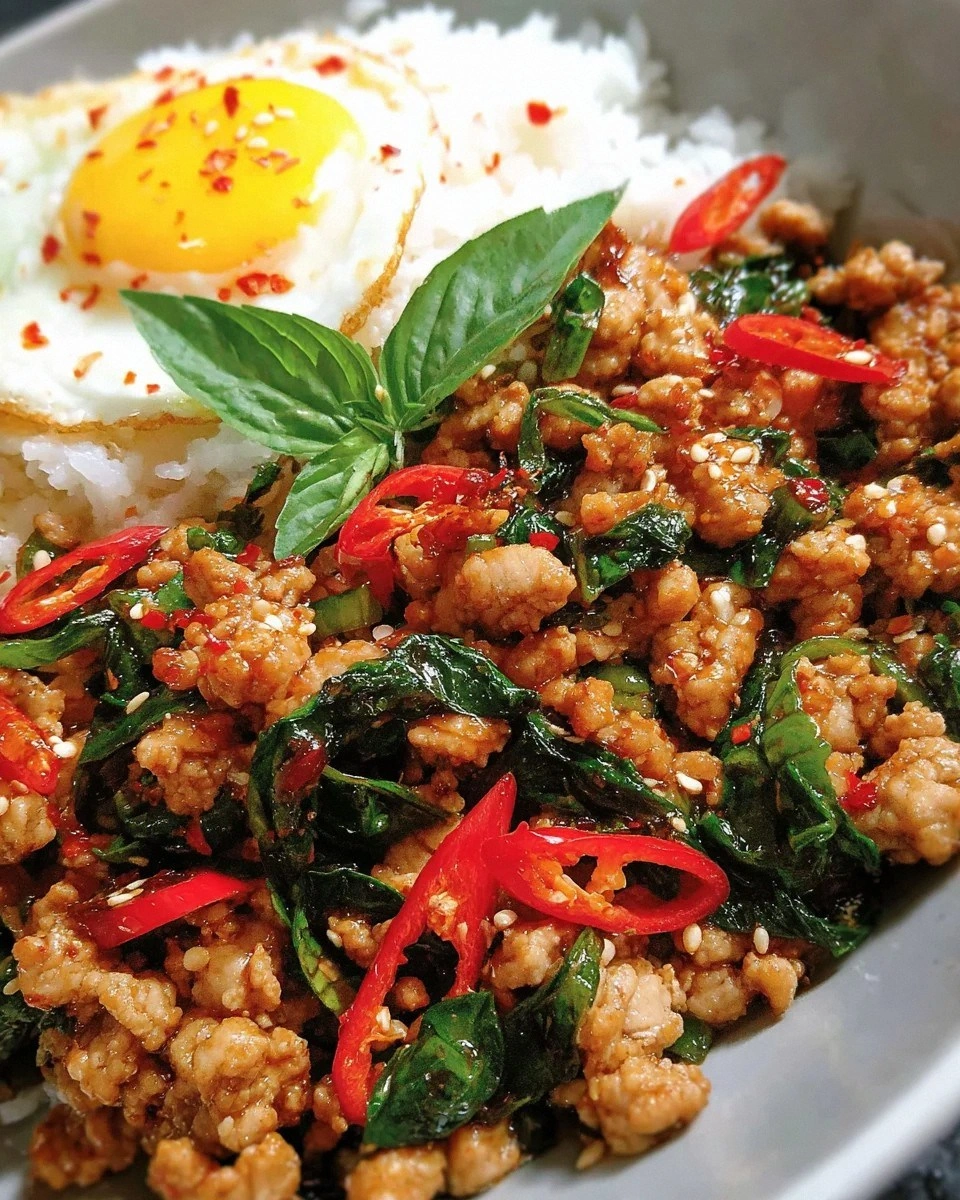
Picture this: a sizzling wok humming like a low‑pitched drum, the air thick with the perfume of garlic and fresh basil, the glossy sauce clinging to every morsel of ground chicken like a silk scarf. The sound of the sauce hitting the hot oil is a sizzle that says “we’re about to get serious,” while the bright green chilies flash like tiny fireworks. When you finally scoop the stir‑fry onto a bed of fluffy jasmine rice, the steam rises in a fragrant cloud that whispers promises of comfort and adventure in the same breath. And when you crown it with a perfectly fried egg, the yolk bursts like liquid sunshine, turning the whole dish into a glossy, savory masterpiece.
Most recipes get this completely wrong. They either drown the basil in a sea of oil, over‑sweeten the sauce, or forget the essential dash of fish sauce that gives the dish its signature punch. I’ve taken the time to balance each component so that no single element overshadows the other. The secret? A quick‑cook technique that locks in the chicken’s juiciness, a precise ratio of light to dark soy sauce for depth and color, and a final flourish of fresh basil that keeps its bright flavor intact. If you’ve ever struggled with a soggy, bland pad gai, you’re not alone — and I’ve got the fix.
Okay, ready for the game‑changer? I’m about to walk you through every single step — by the end, you’ll wonder how you ever made this dish any other way. I dare you to taste this and not go back for seconds. Let’s dive in and make the best Thai Basil Chicken Pad Gai you’ll ever create at home.
What Makes This Version Stand Out
- Flavor Balance: The combination of light and dark soy sauces, fish sauce, and a whisper of maple syrup creates a sweet‑savory harmony that sings on the palate without overwhelming the basil.
- Texture Play: Ground chicken stays tender and slightly crisp on the edges, while the fresh basil leaves stay vibrant, providing a pleasant contrast to the silky sauce.
- Simplicity: All the magic happens in one wok, meaning you spend less time washing dishes and more time devouring the results.
- Ingredient Quality: Using avocado oil for its high smoke point keeps the aromatics from burning, preserving the delicate flavors of garlic and chilies.
- Crowd Reaction: This dish consistently gets the “wow” reaction at dinner parties, especially when you finish with a fried egg that oozes golden goodness.
- Make‑Ahead Potential: The sauce can be pre‑made and stored, letting you assemble the stir‑fry in under ten minutes on a busy weeknight.
- Versatility: Swap ground chicken for pork or tofu, and you still get that unmistakable Thai basil vibe.
- Visual Appeal: The pop of red and green chilies against the deep brown sauce makes the plate look as good as it tastes.
Inside the Ingredient List
The Flavor Base
Brown onion or shallots are the aromatic foundation. Their natural sugars caramelize quickly, adding a sweet depth that balances the heat from the chilies. If you skip them, the dish loses that subtle sweetness and can feel flat. For a milder version, use finely diced shallots; for a bolder bite, go with a medium brown onion, diced thin.
Garlic is the flavor bomb that makes the whole thing sing. Freshly minced garlic releases allicin, which gives that sharp, lingering perfume that makes your kitchen feel alive. Overcooking garlic turns it bitter, so keep an eye on the pan. If you’re allergic to garlic, try a pinch of asafoetida – it mimics the aroma surprisingly well.
The Heat Crew
Red chili and green mild chili pepper bring the heat and a splash of color. The red chili adds a punchy, lingering fire, while the green chili offers a fresher, more vegetal heat. Adjust the amount to suit your tolerance; you can de‑seed the chilies for a milder profile. Skipping them entirely will make the dish feel one‑dimensional, missing that essential Thai spark.
The Sauce Squad
Avocado oil is the unsung hero here. Its high smoke point means you can sear the chicken without the oil smoking up the kitchen, preserving the clean flavors of the aromatics. If you don’t have avocado oil, grapeseed or refined coconut oil work just as well.
Light and dark soy sauces together give both saltiness and color. Light soy adds a salty, umami backbone, while dark soy contributes a caramel hue and a touch of sweetness. Using only one will either leave the sauce too pale or overly sweet.
Maple syrup or liquid honey is the subtle sweetener that balances the salt and acidity. It also adds a glossy sheen to the sauce. If you’re vegan, stick with maple; if you prefer a richer flavor, honey is perfect.
Garlic chili sauce or sriracha provides an extra layer of heat and a slight tang. It’s the secret weapon that makes the sauce “pop” on the tongue. Use sparingly at first; you can always add more later.
Oyster sauce adds depth with its briny, slightly sweet profile. It’s the ingredient that makes the sauce feel luxurious rather than watery. If you’re allergic to shellfish, a mushroom‑based umami sauce can substitute.
Fish sauce is the quintessential Thai umami kicker. A teaspoon is enough to give the dish that unmistakable depth that you can’t replicate with soy alone. It’s potent, so a little truly goes a long way.
The Starch and Finish
Jasmine rice is the fluffy, fragrant bed that soaks up the sauce. Its subtle floral notes complement the basil beautifully. If you want extra fiber, swap half the jasmine rice for brown rice, but keep the cooking water ratio in mind.
Fried eggs add richness and a velvety texture when the yolk breaks over the stir‑fry. They also make the dish feel more complete, turning a simple stir‑fry into a hearty meal. For a lighter version, you can skip the eggs or use poached eggs.
Green onion provides a fresh crunch and a pop of color that brightens the plate. Slice them thinly and sprinkle just before serving to retain their crispness.
Additional Thai basil leaves and sesame seeds are the final garnish. The extra basil reinforces the herbaceous flavor, while the sesame seeds add a subtle nutty crunch. Toast the seeds lightly for extra aroma.
Prawn crackers bring a playful crunch on the side, offering texture contrast that makes each bite exciting. If you’re allergic to shellfish, try rice crackers or toasted chickpeas instead.
Everything's prepped? Good. Let’s get into the real action…
The Method — Step by Step
Heat a wok or large skillet over medium‑high heat until it starts to shimmer. Add 2 tablespoons of avocado oil and let it glide across the surface. When the oil is hot enough that a drop of water sizzles instantly, you’re ready for the aromatics. Toss in the finely diced brown onion (or shallots) and stir‑fry for about 2 minutes until they turn translucent and start to caramelize. Pro tip: Keep the onions moving; you want them golden, not burnt.
Add the minced garlic, red chili, and green mild chili pepper. The moment those aromatics hit the oil, you’ll hear a sharp sizzle that signals flavor is being released. Stir constantly for 30 seconds, watching the garlic turn a light golden hue—be careful not to let it brown too much, or it will become bitter. Watch Out: Garlic can go from fragrant to acrid in seconds; if it starts to darken, reduce the heat immediately.
Push the aromatics to the side of the wok and add the ground chicken in a single layer. Let it sit untouched for about 45 seconds to develop a light crust, then break it up with a spatula. Cook for 4‑5 minutes, stirring occasionally, until the chicken is browned and no longer pink. The browning adds a depth of flavor that plain boiled chicken can’t match.
While the chicken is cooking, whisk together the sauce: 1 tablespoon light soy sauce, 1 teaspoon dark soy sauce, 1 teaspoon fish sauce, 1 tablespoon oyster sauce, 1 teaspoon maple syrup (or honey), and 1 teaspoon garlic chili sauce. Pour the mixture over the chicken and aromatics, stirring vigorously so everything coats evenly. You’ll hear a gentle bubbling as the sugars caramelize—this is the moment of truth.
Add the fresh Thai basil leaves in two batches. The first handful goes in while the sauce is still hot; it wilts quickly, releasing its aromatic oils. Let it stir for about 30 seconds, then add the remaining basil and give it another quick toss. The basil should stay bright green, not wilted to brown. Pro tip: Adding the basil at the very end preserves its flavor and color.
While the basil finishes, start cooking the jasmine rice according to package instructions (usually 1 cup rice to 1 ¼ cups water, simmer 15 minutes). Fluff with a fork once done, and keep covered to stay warm. If you’re using brown rice, add an extra 5 minutes to the cooking time.
In a separate non‑stick pan, fry the eggs sunny‑side up, about 2 minutes for a runny yolk or 3 minutes for a set white. Season with a pinch of salt. The yolk will later melt into the sauce, creating a luxurious coating for the rice.
To plate, mound a generous scoop of jasmine rice in the center of each bowl, spoon the basil chicken over the top, and gently place a fried egg in the middle. Sprinkle with sliced green onions, extra basil leaves, toasted sesame seeds, and a side of prawn crackers for crunch. Serve immediately while the aromas are still dancing in the air.
That’s it — you did it. But hold on, I’ve got a few more tricks that’ll take this to another level. Stay with me here — this is worth it.
Insider Tricks for Flawless Results
The Temperature Rule Nobody Follows
Never start with a cold pan. Pre‑heat your wok until a few drops of water dance and evaporate within seconds. This ensures the oil spreads evenly and the aromatics begin to sizzle instantly, locking in flavor. I once tried “low‑and‑slow” and ended up with soggy chicken that tasted like boiled meat. The high heat creates a slight crust on the chicken, giving it that coveted “seared” flavor without overcooking the interior.
Why Your Nose Knows Best
Your sense of smell is the ultimate timer. When the sauce starts to thicken and you catch a sweet, caramel aroma, that’s the cue to add the basil. If you wait too long, the sauce will dry out; too early and the basil will lose its bright punch. Trust that nose — it’s more reliable than any kitchen timer.
The 5‑Minute Rest That Changes Everything
After you finish stir‑frying, let the wok sit off the heat for five minutes. This brief rest allows the flavors to meld, especially the fish sauce and oyster sauce, which need a moment to integrate fully. I used to serve it straight away and noticed a slight “edge” in the flavor; the rest smooths that out.
Egg‑Yolk Magic
If you love a richer sauce, gently break the yolk into the wok just before serving and stir it in. The yolk emulsifies with the sauce, creating a velvety coating that clings to the rice like silk. Be careful not to over‑mix, or you’ll lose the beautiful marbled look.
Prawn Cracker Crunch
For the ultimate crunch, lightly spray the prawn crackers with a mist of oil and toast them in the same wok for 30 seconds after the chicken is done. This not only adds texture but also infuses a faint, buttery note that complements the basil.
Creative Twists and Variations
This recipe is a playground. Here are some of my favorite ways to switch things up:
Coconut‑Infused Pad Gai
Swap half the avocado oil for coconut milk and add a splash of lime juice at the end. The coconut adds a subtle sweetness and a creamy texture, while the lime brightens the dish. Perfect for a tropical vibe.
Spicy Peanut Pad Gai
Stir in 1 tablespoon of smooth peanut butter with the sauce and increase the sriracha to 2 teaspoons. The peanut butter creates a nutty, velvety coating, and the extra heat makes it a bold, satisfying bite.
Veggie‑Loaded Basil Bowl
Add sliced bell peppers, snap peas, and shredded carrots during the stir‑fry. The vegetables bring crunch, color, and extra nutrients, turning the dish into a balanced one‑pot wonder.
Pork‑First Pad Gai
Replace ground chicken with ground pork for a richer, fattier flavor. Pork pairs wonderfully with the sweet‑savory sauce, and the extra fat helps the basil cling even better.
Vegan Basil “Chicken”
Use crumbled firm tofu or plant‑based chicken mince. Add a splash more soy sauce to compensate for the reduced umami, and finish with a drizzle of toasted sesame oil for depth. The result is just as satisfying for herbivores.
Storing and Bringing It Back to Life
Fridge Storage
Allow the stir‑fry to cool to room temperature (no more than two hours), then transfer to an airtight container. It keeps well for up to 3 days. When reheating, add a splash of water or chicken broth to restore moisture, then stir over medium heat until steaming.
Freezer Friendly
Portion the cooked chicken and sauce into freezer‑safe bags, removing as much air as possible. Freeze for up to 2 months. Thaw overnight in the fridge, then reheat in a skillet with a teaspoon of avocado oil and a splash of water. The basil can be added fresh after reheating to keep its bright flavor.
Best Reheating Method
The stovetop method is king: heat a non‑stick pan over medium heat, add a drizzle of oil, then the chilled stir‑fry. Sprinkle a teaspoon of water, cover, and let steam for a minute before uncovering and tossing. This revives the sauce’s sheen and keeps the chicken tender.