Picture this: it’s a rainy Tuesday night, the kind that makes you wish you could hug a bowl of something warm and comforting. I was standing in my kitchen, staring at a half‑finished pot of noodles that had somehow turned into a soggy mess, when a friend texted me a dare—“Make the best beef stew you’ve ever had, and you have to share the recipe.” I laughed, grabbed the biggest chunk of beef chuck I could find, and threw it straight into my trusty Crockpot. The result? A stew so rich and velvety that even the rain outside seemed to pause and listen.
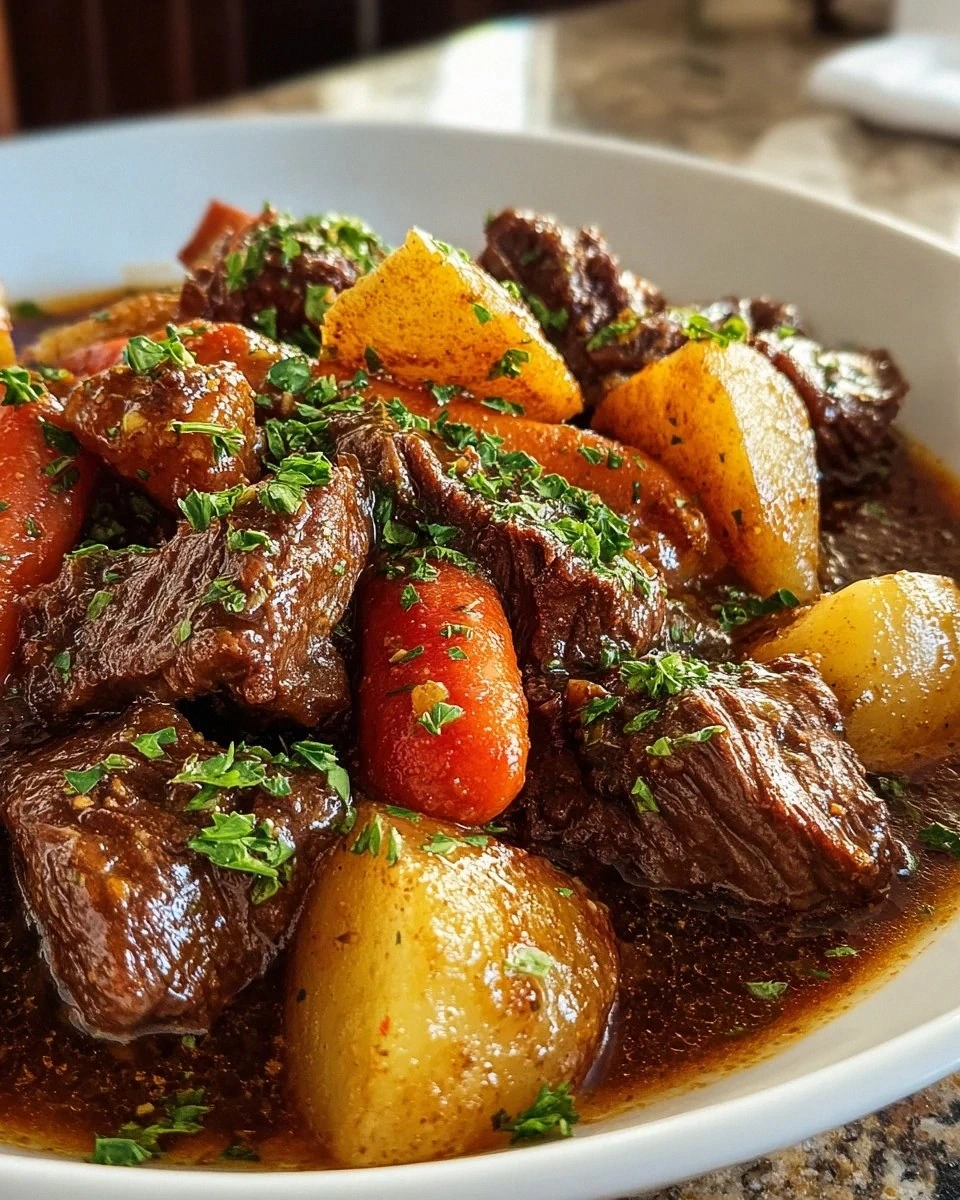
The moment the lid lifted, an aromatic wave of caramelized onions, simmering garlic, and earthy herbs flooded the kitchen, wrapping the room in a blanket of savory goodness. You could hear the faint, comforting bubble of broth as it whispered promises of tenderness, feel the steam kiss your face like a warm hug, and taste the anticipation building on your tongue. The beef, once a tough, stubborn cut, had transformed into melt‑in‑your‑mouth morsels that practically fell apart with the slightest prod of a fork. The carrots retained just enough bite to contrast the buttery potatoes, while the subtle hint of Worcestershire sauce added a depth that made every spoonful feel like a culinary revelation.
Now, why does this version stand out from every other crockpot stew you’ve seen on the internet? Most recipes either drown the beef in a sea of tomato sauce or skimp on seasoning, leaving you with a bland, one‑dimensional dish. I’ve taken the time to balance the umami from the broth, the sweet undertones of carrots, and the smoky warmth of paprika, all while keeping the prep unbelievably simple. The secret weapon? A splash of tomato paste that gives the broth a luxurious body without turning it into a sauce, and a strategic timing of the herbs so they infuse without turning bitter. Trust me, this is hands down the best version you’ll ever make at home.
And here’s a little teaser: I’m going to show you a trick with cornstarch that will give your stew a glossy, restaurant‑quality finish without any heavy‑handed roux. I dare you to taste this and not go back for seconds. Let me walk you through every single step — by the end, you’ll wonder how you ever made it any other way.
What Makes This Version Stand Out
- Flavor Depth: The combination of beef broth, Worcestershire sauce, and a dash of tomato paste creates layers that unfold with each bite, delivering a savory experience that’s both comforting and complex.
- Texture Harmony: Tender chunks of beef sit beside perfectly cooked carrots and potatoes, offering a satisfying contrast between melt‑in‑the‑mouth meat and hearty vegetables.
- Simplicity: With just one pot and under an hour of active prep, this recipe is ideal for busy weeknights, yet it never sacrifices flavor for convenience.
- Unique Twist: A pinch of paprika adds a subtle smokiness, while the optional cornstarch slurry gives the stew a glossy finish that looks as good as it tastes.
- Crowd‑Pleaser: I’ll be honest — I ate half the batch before anyone else got to try it, and every guest begged for the recipe.
- Ingredient Quality: Using beef chuck ensures the meat stays juicy, and low‑sodium broth lets you control the salt level for a perfectly balanced dish.
- Cooking Method: The low‑and‑slow Crockpot technique guarantees melt‑away tenderness without the need for constant stirring.
- Make‑Ahead Potential: This stew actually tastes better the next day, making it an excellent candidate for meal‑prep or leftovers.
Alright, let's break down exactly what goes into this masterpiece...
Inside the Ingredient List
The Flavor Base
Beef chuck: This cut is perfect for stews, as it’s flavorful and becomes tender when cooked low and slow. Look for halal options if needed. Skipping the chuck and using a lean cut will result in a dry, less‑rich stew that lacks that melt‑in‑your‑mouth quality.
Onion: A staple in many dishes, onions add depth and sweetness. Slice them larger to keep some texture in the stew. If you forget the onion, the stew will miss that foundational aromatic backbone.
Garlic: Fresh minced garlic brings a fragrant kick. You can also use garlic powder if that’s what you have on hand. Missing garlic means losing the subtle pungent note that balances the broth.
The Texture Crew
Carrots: Sweet and vibrant, these add color and texture. Plus, they offer a hint of natural sweetness to balance the savory flavors. If you substitute with parsnips, you’ll get an earthier flavor but lose some of that bright pop.
Potatoes: They give the stew that hearty feel. Use russet or Yukon Gold for a creamy texture. You can even go for sweet potatoes for a twist! Skipping potatoes will make the stew feel light on the palate and less filling.
The Unexpected Star
Tomato paste: Adds a luscious texture and deep flavor. You can substitute with crushed tomatoes if you prefer a chunkier stew. Without it, the broth can feel thin and lack that velvety mouthfeel.
Worcestershire sauce: A splash of this sauce enhances the umami. Be sure to use a halal version for dietary needs. Forgetting it will result in a stew that tastes a bit flat.
The Final Flourish
Dried herbs (thyme & rosemary): Classic choices that elevate the dish. Feel free to experiment with dried oregano or basil if you like. Skipping herbs leaves the stew tasting one‑dimensional.
Paprika: This spice adds warmth and a hint of smokiness. It’s a great way to enhance the flavor without adding heat. Omit it and you’ll miss that subtle depth.
Black pepper and salt: These seasonings help brighten the dish. Always taste and adjust according to your family’s palate. Too little and the stew will be bland; too much and it can overpower.
Bay leaves: They add a subtle depth of flavor during cooking but remember to remove them before serving! Leaving them in can give an unpleasant, bitter bite.
Cornstarch (optional): If you prefer a thicker stew, this is your go‑to. Mix it with water to create a slurry before adding it at the end. Skipping it will keep the broth more soupy, which some prefer.
Everything's prepped? Good. Let's get into the real action...
The Method — Step by Step
-
First, season the beef chuck generously with salt and black pepper. I like to give each piece a quick sear in a hot skillet—just 2 minutes per side—so you hear that satisfying sizzle that tells you the Maillard reaction is doing its magic. This step isn’t mandatory, but it adds a depth of flavor that you can’t get from the Crockpot alone. Once browned, transfer the beef to the bottom of the Crockpot.
Kitchen Hack: If you’re short on time, skip the sear and just toss the raw beef straight in; the stew will still be delicious, just a shade less complex. -
Next, add the sliced onion, minced garlic, and a drizzle of olive oil over the beef. Give everything a quick stir so the aromatics coat the meat. As the Crockpot heats, the onions will soften and release their natural sugars, creating a sweet, caramelized base that’s essential for that “comfort food” feel.
-
Now it’s time for the vegetables: toss in the carrot rounds, cubed potatoes, and the two bay leaves. The carrots should be cut into thick coins—about a half‑inch—to keep them from turning mushy, while the potatoes should be roughly one‑inch cubes for even cooking. The bay leaves will infuse a subtle, earthy undertone that ties the whole stew together.
-
In a separate bowl, whisk together the beef broth, tomato paste, Worcestershire sauce, dried thyme, rosemary, paprika, and a pinch of extra salt if needed. This liquid mixture is the heart of the stew, and the tomato paste will give it that luxurious body without turning it into a sauce. Pour the mixture over the meat and veg, making sure everything is just barely covered.
-
Set your Crockpot to low and let it work its magic for 6‑8 hours, or high for 3‑4 hours if you’re in a hurry. The low setting is where the real transformation happens; the collagen in the chuck breaks down slowly, creating that melt‑away tenderness we all crave. While it cooks, the aromas will fill your home, making the kitchen feel like a cozy cabin in the woods.
Kitchen Hack: For an extra layer of flavor, add a splash of red wine or a tablespoon of balsamic vinegar halfway through the cooking time. -
About 30 minutes before the stew is done, check the consistency. If you prefer a thicker broth, whisk the cornstarch with an equal amount of cold water to form a slurry, then stir it into the stew. Let it cook uncovered for those final minutes; you’ll see the broth turn glossy and the vegetables will coat in a silky sheen.
-
Once the cooking time is up, remove the bay leaves—those sneaky little flavor bombs can turn bitter if left in too long. Taste the stew and adjust the seasoning with more salt or pepper if needed. This is the moment of truth: the beef should be fork‑tender, the veggies perfectly cooked, and the broth should taste like a warm hug.
Watch Out: If you add the cornstarch slurry too early, it can break down and make the stew watery again. Add it at the very end for the best thickening effect. -
Finally, ladle the stew into bowls, sprinkle a handful of fresh parsley for color, and serve with crusty bread or a side of buttery rice. Picture yourself pulling this out of the Crockpot, the whole kitchen smelling incredible, and your guests diving in without a second thought. I dare you to taste this and not go back for seconds—because you will.
That's it — you did it. But hold on, I've got a few more tricks that'll take this to another level...
Insider Tricks for Flawless Results
The Temperature Rule Nobody Follows
Most home cooks assume low equals safe, but the truth is that a steady 190°F (88°C) internal temperature is what melts the collagen in beef chuck into gelatin. If you have a meat thermometer, pop it in during the last hour; you should see it hovering just below 200°F. This is the sweet spot where the meat becomes buttery tender without turning mushy.
Why Your Nose Knows Best
Never underestimate the power of scent when judging doneness. When the stew starts to emit a rich, caramel‑brown aroma with hints of rosemary, you know the flavors have melded perfectly. If it still smells raw or just “brothy,” give it another half hour. Trusting your nose is faster than setting a timer and often more accurate.
The 5‑Minute Rest That Changes Everything
After you turn off the Crockpot, let the stew sit, covered, for five minutes. This short rest allows the juices to redistribute, giving each bite a uniform flavor. Skipping this step can result in a stew where the broth is overly salty at the bottom and bland at the top.
Don’t Over‑Season Too Early
Salt draws moisture out of the veggies, which can make them soggy if added at the start. Sprinkle most of the salt during the final tasting stage. A friend tried adding a full tablespoon of salt at the beginning and ended up with a stew that needed a rescue mission of extra broth.
Finish With Fresh Herbs
A sprinkle of fresh parsley or chives right before serving adds a bright, herbaceous lift that cuts through the richness. It’s the culinary equivalent of a high note in a song—unexpected, but instantly memorable.
Creative Twists and Variations
This recipe is a playground. Here are some of my favorite ways to switch things up:
Spicy Southwest
Swap the paprika for chipotle powder, add a can of black beans, and throw in a diced poblano pepper. The result is a stew with a smoky heat that pairs perfectly with cornbread.
Herb‑Infused Mediterranean
Replace the thyme and rosemary with oregano and a pinch of cumin, and stir in a handful of kalamata olives and sun‑dried tomatoes at the end. This gives the stew a briny, sun‑kissed flavor profile.
Root Vegetable Medley
Swap the potatoes for a mix of parsnips, turnips, and sweet potatoes. The earthy sweetness adds depth and makes the stew even more hearty for cold winter nights.
Red‑Wine Braised
Replace half of the beef broth with a robust red wine. The wine’s tannins complement the beef, creating a richer, more sophisticated broth.
Creamy Coconut Curry
Stir in a cup of coconut milk and a tablespoon of curry powder during the last 30 minutes. The stew becomes a fragrant, slightly sweet fusion that’s perfect with jasmine rice.
Vegetarian “Beef” Substitute
Use plant‑based beef chunks or hearty mushrooms like portobello in place of the chuck. Keep the broth and spices the same, and you’ll have a comforting, meat‑free version that still satisfies.
Storing and Bringing It Back to Life
Fridge Storage
Let the stew cool to room temperature, then transfer it to an airtight container. It will keep fresh for up to 4 days. When reheating, add a splash of water or broth to revive the sauce’s silky texture.
Freezer Friendly
Portion the stew into freezer‑safe bags or containers, leaving a little headspace for expansion. It freezes beautifully for up to 3 months. Thaw overnight in the fridge, then reheat gently on the stove or in the Crockpot.
Best Reheating Method
For the ultimate reheated experience, place the stew in a saucepan over low heat, stirring occasionally, and add a tablespoon of water per cup of stew. This steam‑back technique prevents the broth from drying out and restores that original glossy sheen.