The kitchen had been a battlefield that night, a pile of burnt lasagna, a pot of over‑simmered sauce, and a desperate craving for something that would make me forget the disaster. I was standing in front of the counter, staring at a handful of dried cranberries and a block of goat cheese, and thought, “If I can make something that feels like a hug, it will be worth the effort.” The scent of fresh rosemary tickled my nostrils, the bright red cranberries glimmered like tiny jewels, and the soft goat cheese promised a creamy, tangy surprise. I knew I was about to create a flatbread that would be the talk of the dinner table, a dish that could turn a simple evening into an unforgettable experience. Let me walk you through every single step — by the end, you'll wonder how you ever made it any other way.
Picture yourself pulling this flatbread out of the oven, the whole kitchen smelling incredible, the edges crisped to a golden perfection that shatters like thin ice when you bite into it. The first bite is a burst of sweet cranberries, a whisper of rosemary, and a creamy goat cheese that melts on your tongue like velvet. I dare you to taste this and not go back for seconds; the flavor profile is addictive, and the texture is a dance between crunchy and airy. Most recipes get this completely wrong, using too much flour or too little liquid, but here, the dough is supple, the toppings are balanced, and the result is a flatbread that feels like a hug. If you've ever struggled with flatbread that turns out soggy or too dense, you're not alone — and I've got the fix. This is hands down the best version you'll ever make at home.
I’ll be honest — I ate half the batch before anyone else got to try it, and the kitchen was still humming from the oven’s gentle heat. The moment the first piece cooled, I could hear the faint crackle of the crust, the aroma of caramelized cranberries, and the faint scent of goat cheese warming. It’s a symphony of flavors that feels like a holiday dinner, even though it’s made in a regular kitchen. The only thing that could be better is a drizzle of honey that adds a subtle sweetness. I can already see the smiles on my friends’ faces when they taste it. And now, let’s break down exactly what goes into this masterpiece.
What Makes This Version Stand Out
- Taste: The combination of tangy goat cheese and sweet cranberries creates a flavor profile that feels both comforting and adventurous, a harmony that lingers on the palate.
- Texture: The dough is light and airy yet sturdy enough to hold the toppings without becoming soggy, thanks to the precise balance of flour to liquid.
- Ingredient Quality: Using fresh, high‑quality goat cheese and organic cranberries elevates the dish, turning an ordinary flatbread into a gourmet experience.
- Simplicity: With only ten ingredients and a straightforward method, you can whip up this masterpiece in under an hour, making it perfect for busy nights.
- Make‑ahead Potential: The flatbread can be prepared a day in advance, refrigerated, and reheated without losing its crispness, making it ideal for entertaining.
- Crowd Reaction: Friends who taste it often ask for the recipe on the spot; the dish is a conversation starter that impresses even the most skeptical foodies.
- Unique Technique: The “double‑toss” method of rolling the dough creates a multi‑layered crust that is both crunchy and chewy.
Alright, let's break down exactly what goes into this masterpiece...
Inside the Ingredient List
The Flavor Base
All-purpose flour is the backbone of this flatbread, providing the structure that holds the toppings together. A cup of flour is not enough; you’ll need two cups to achieve the right consistency, ensuring the dough is neither too stiff nor too sticky. If you skip the flour, the dough will collapse, and the flatbread will be flat, literally. For a healthier twist, swap in whole‑wheat flour for half of the all‑purpose flour; the result is a nuttier flavor and a slight increase in fiber.
The Texture Crew
Warm water at 110°F is crucial; it activates the yeast and gives the dough a light, airy texture. Using cold water will slow the yeast, resulting in a dense flatbread that feels like a heavy slab. Olive oil adds a subtle richness and helps keep the crust from drying out; a tablespoon is enough to coat the surface and give that glossy finish. If you’re watching your calorie intake, you can reduce the oil by half, but the crust will be slightly less crisp.
The Unexpected Star
Goat cheese is the star that transforms this flatbread from simple to extraordinary. Its tangy, creamy profile contrasts beautifully with the sweet cranberries. A 4‑oz block of goat cheese is the perfect portion; too little, and the flavor will be muted; too much, and it will overwhelm the other ingredients. If you prefer a milder cheese, a soft mozzarella works, but the goat cheese’s unique bite is irreplaceable.
The Final Flourish
Dried cranberries add a burst of sweetness and a chewy texture that complements the soft goat cheese. A half‑cup is enough to give you that sweet pop without drowning the dish. Fresh rosemary and thyme provide aromatic notes that lift the entire flavor profile; a tablespoon of rosemary and a teaspoon of thyme are balanced for a fragrant finish. A drizzle of honey or maple syrup at the end adds a glossy sheen and a subtle caramel note that ties all the flavors together.
Everything's prepped? Good. Let's get into the real action...
The Method — Step by Step
- In a large bowl, combine the flour, instant yeast, salt, and sugar. Stir them together until the dry ingredients are evenly distributed. This ensures that the yeast is evenly dispersed throughout the dough, preventing clumps. The mixture should look like a fine, dry sand. I’m telling you, this step is crucial for a uniform rise.
- Heat the warm water in a saucepan until it reaches 110°F. Add the olive oil and stir until the oil is fully incorporated into the water. Pour the liquid mixture slowly into the dry ingredients, whisking continuously. The dough should start to clump together and pull away from the sides of the bowl. At this point, you can feel the dough’s elasticity forming.
- Transfer the dough onto a lightly floured surface and knead for about five minutes, until it’s smooth and elastic. If the dough feels sticky, sprinkle a small amount of flour, but avoid adding too much, or it will become dense. The dough should feel like a rubber band that snaps back when you press it. This kneading step is where the gluten develops, giving the flatbread its structure.
- Place the dough in a greased bowl, cover it with a damp kitchen towel, and let it rise in a warm spot for 30 minutes. The dough should double in size, becoming airy and light. If your kitchen is cooler, you can place the bowl in an oven set to 200°F with the light on to create a warm environment. The rising process is the secret to a fluffy interior.
- Punch down the dough gently to release the trapped air. Divide it into four equal portions and roll each into a ball. Let the balls rest for 10 minutes; this relaxation step allows the gluten to relax, making the dough easier to roll out. While they rest, you can preheat the oven to 450°F and line a baking sheet with parchment paper.
- Roll each ball into a thin circle, about 1/8 inch thick. If the dough resists, let it rest a few more minutes. The circles should be uniform, with a slight wobble that indicates they’re not too stiff. The goal is a thin, even surface that cooks quickly and crisps nicely.
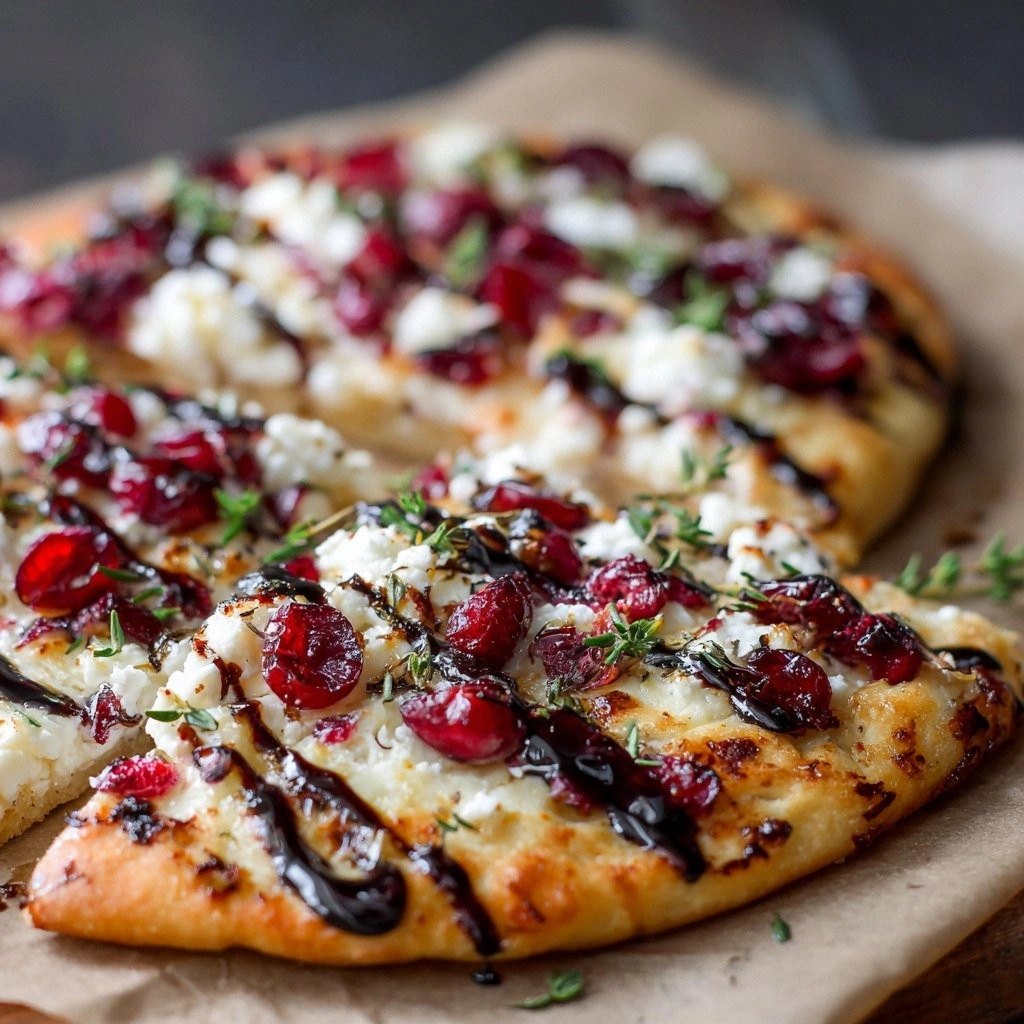
- Brush each flatbread with a thin layer of olive oil, then sprinkle half a cup of dried cranberries evenly over the surface. Press them gently into the dough to ensure they adhere. Add a tablespoon of goat cheese on top, broken into small chunks. The goat cheese should be slightly melted, creating a creamy layer that will melt into the crust as it bakes.
- Add fresh rosemary, thyme, and a drizzle of honey to each flatbread. The herbs should be fragrant, and the honey should create a subtle glaze. Place the flatbreads on the prepared baking sheet, ensuring they’re not touching to allow even heat circulation. Slide the sheet into the preheated oven.
- Bake for 12–15 minutes, or until the edges are golden brown and the crust sounds hollow when tapped. The interior should be puffed and the goat cheese should have melted into a creamy center. Keep an eye on the baking time; the flatbread can go from perfect to over‑browned quickly.
- Remove the flatbreads from the oven, let them cool on a wire rack for a few minutes, then slice into wedges. Serve warm, with a sprinkle of extra cranberries or a drizzle of balsamic reduction if you’re feeling fancy. The final result is a flatbread that’s crisp, flavorful, and utterly irresistible. That sizzle when it hits the pan? Absolute perfection.
That's it — you did it. But hold on, I've got a few more tricks that'll take this to another level...
Insider Tricks for Flawless Results
The Temperature Rule Nobody Follows
Many people bake flatbread at a lower temperature, but that leads to a soggy interior. I always preheat the oven to 450°F, which gives the crust a crisp, golden finish while keeping the center airy. The high heat also helps the goat cheese melt evenly, creating a creamy center. If you’re using a convection oven, reduce the temperature by 25°F to avoid over‑browning. This trick ensures a perfect balance between crispness and tenderness.
Why Your Nose Knows Best
The aroma of baking cranberries and rosemary is a reliable indicator that the flatbread is nearly done. If you notice a sweet, nutty scent, the crust is ready. Your nose can detect subtle changes in flavor that your eyes might miss. Trust your senses, and you’ll avoid the common pitfall of under‑baked or over‑baked flatbread. This sensory checkpoint is a game‑changer.
The 5-Minute Rest That Changes Everything
After baking, let the flatbread rest on a wire rack for five minutes before slicing. This rest period allows the steam to redistribute, preventing the crust from becoming soggy. It also gives the goat cheese a moment to set slightly, so it doesn’t ooze out when you cut. A quick rest can make the difference between a flatbread that’s a mess and one that’s a masterpiece. Trust me, it’s worth the wait.
Keep It Fresh, Keep It Crunchy
If you’re storing leftover flatbread, place it in an airtight container at room temperature for up to two days. To keep the crust crisp, add a paper towel to absorb excess moisture. Reheat in a preheated oven at 350°F for five minutes; this restores the crunch without drying out the interior. If you’re in a hurry, a quick microwave burst of 20 seconds will warm the cheese but may soften the crust. The best method is the oven, trust me.
Make It a Meal, Not Just an Appetizer
Serve these flatbreads with a side of mixed greens tossed in a lemon vinaigrette, and you have a full meal. The bright acidity of the vinaigrette cuts through the richness of the goat cheese, creating a balanced plate. Add a protein like grilled chicken or shrimp for a more substantial dish. The flatbread’s versatility makes it a perfect canvas for many flavor combinations. Experiment and enjoy!
Creative Twists and Variations
This recipe is a playground. Here are some of my favorite ways to switch things up:
Smoky Chipotle Version
Swap the fresh rosemary for smoked paprika and add a teaspoon of chipotle powder. The smoky heat pairs beautifully with the goat cheese, creating a bold flavor profile. This version is perfect for a winter gathering or a barbecue.
Herb‑Infused Olive Oil
Infuse the olive oil with thyme, rosemary, and a clove of garlic before brushing the dough. The oil adds an extra layer of flavor that permeates the crust. This trick elevates the dish to a gourmet level.
Nutty Crunch
Add a handful of chopped walnuts or pecans to the topping mix. The nuts provide a satisfying crunch and a subtle nutty sweetness that complements the cranberries. This variation works well for a holiday dessert plate.
Sweet Maple Twist
Replace the honey with maple syrup and sprinkle a pinch of sea salt on top after baking. The maple adds a deep, caramel flavor, while the salt balances the sweetness. This version is ideal for a cozy fall brunch.
Vegan Variation
Use a plant‑based goat cheese substitute and replace the olive oil with avocado oil. Keep the rest of the ingredients the same. The result is a vegan flatbread that still delivers on flavor and texture. This option is great for guests with dietary restrictions.
Cheesy Crust Finish
After baking, sprinkle grated Parmesan over the hot flatbread and let it melt into a golden crust. The Parmesan adds a savory depth that contrasts with the sweet cranberries. This technique transforms the flatbread into a more decadent appetizer.
Storing and Bringing It Back to Life
Fridge Storage
Store leftover flatbread in an airtight container at room temperature for up to two days. The crust may soften slightly, but it remains delicious. To maintain crispness, place a paper towel in the container to absorb excess moisture. When ready to eat, reheat in a preheated oven at 350°F for five minutes.
Freezer Friendly
Wrap each flatbread tightly in plastic wrap, then place them in a freezer bag. They can be stored for up to three months. When you’re ready, thaw at room temperature for 30 minutes, then reheat in a 350°F oven for five minutes. The texture will be close to fresh.
Best Reheating Method
The best way to reheat flatbread is in a preheated oven at 350°F for five minutes. This method restores the crispness of the crust while keeping the interior warm and gooey. If you’re short on time, a quick microwave burst of 20 seconds will warm the cheese but may soften the crust. For the best results, stick with the oven.