Picture this: I’m standing in a cramped kitchen, the scent of fresh fish mingling with the lingering aroma of last night’s burnt toast, and my friend challenges me to turn a whole snapper into something that will make even the most skeptical of taste buds swoon. I was skeptical too, because the last time I tried a whole fish, the result was a soggy mess that barely flaked. But that night, armed with a simple yet daring glaze, I pulled a golden miracle from the oven, and the moment the steam curled up, the kitchen filled with a citrusy perfume that made even the grumpy cat pause. I dared you to taste this and not go back for seconds, and the verdict was unanimous: it was the best version you'll ever make at home. I’ll be honest — I ate half the batch before anyone else got a chance to try it. If you’ve ever struggled with whole fish, you’re not alone — and I’ve got the fix.
What sets this snapper apart from every other recipe you’ve seen is not just the ingredients, but the way they work together to create a dish that feels both sophisticated and comforting. The buttery glaze doesn’t just coat the fish; it locks in moisture, giving the flesh a silky texture that practically melts in your mouth. The citrus notes from fresh lemon juice cut through the richness, creating a bright, refreshing counterpoint that elevates the dish. The blend of garlic powder, Italian seasoning, and paprika gives it a depth that feels like a well-aged sauce, while the fresh herbs add a green, aromatic lift. The cooking method—oven baking at a high temperature—ensures a crisp skin that shatters like thin ice, leaving a satisfying crunch that’s the hallmark of a truly great fish. The result is a dish that’s easy to make, yet feels like a gourmet experience, and it’s perfect for both weeknight dinners and special occasions.
Okay, ready for the game-changer? This next part? Pure magic. I’ll walk you through every single step — by the end, you’ll wonder how you ever made it any other way. The secret sauce? A simple butter‑based glaze that you can make in seconds, a dash of paprika for warmth, and a splash of lemon juice that brightens the whole plate. The snapper itself is the star, but with the right seasoning and cooking technique, it transforms into a show‑stopper. And trust me, the moment you pull it out of the oven, the whole kitchen smells incredible, and you’ll feel like a culinary wizard. Let’s dive in.
What Makes This Version Stand Out
- Taste: The glaze balances buttery richness with bright citrus, creating a flavor profile that feels both indulgent and refreshing. The blend of garlic, Italian seasoning, and paprika adds depth and a hint of warmth, while fresh parsley provides a green, aromatic finish.
- Texture: High‑temperature baking produces a skin that crisps up like a fine crust, while the interior stays moist and flaky, almost like a silk scarf. The butter glaze seals in moisture, preventing the fish from drying out.
- Ease: No complex prep or fancy equipment—just a few pantry staples and a simple oven routine. Even a novice can achieve restaurant‑quality results.
- Uniqueness: The combination of melted butter, paprika, and lemon juice is a twist on classic fish recipes, giving it a distinctive edge that sets it apart from standard baked fish.
- Crowd‑pleaser: Whether you’re cooking for a date or a family dinner, this dish delivers wow factors that impress everyone at the table.
- Ingredient Quality: Fresh snapper, real butter, and fresh herbs make a noticeable difference, turning a simple fish into a gourmet experience.
- Cooking Method: Oven baking is forgiving, and the high heat ensures a quick cook that locks in flavors without overcooking.
- Make‑ahead Potential: You can pre‑season the fish and store it in the fridge; just bake it when you’re ready to serve.
Alright, let's break down exactly what goes into this masterpiece…
Inside the Ingredient List
The Flavor Base
The foundation of this dish is the simple yet powerful glaze: melted butter, garlic powder, Italian seasoning, paprika, lemon juice, and minced garlic. Each component works in harmony—garlic powder adds a subtle depth, Italian seasoning brings a herbaceous note, paprika offers a smoky warmth, and lemon juice injects bright acidity that cuts through the richness. If you skip the butter, the fish will dry out; if you omit the lemon, the dish loses its signature brightness. A quick swap: use olive oil instead of butter for a lighter version, but be prepared for a slightly different texture.
The Texture Crew
The whole snapper itself is the star, but the preparation is crucial. Patting the fish dry ensures the skin crispens properly, while making diagonal slashes helps the glaze penetrate evenly. The use of fresh herbs—parsley, both fresh and dried—adds layers of aroma that enhance the overall experience. If you’re using a different fish like sea bass or cod, the same principles apply, but adjust baking time to 12–15 minutes.
The Unexpected Star
A single lemon slice placed inside the cavity might seem trivial, but it creates a subtle steam that keeps the interior moist while infusing the fish with a gentle citrus aroma. The final squeeze of lemon juice on top before serving gives a fresh burst of flavor that elevates every bite. If you’re a fan of extra zest, add a few extra lemon wedges on the side.
The Final Flourish
The finishing touches—fresh parsley, a sprinkle of dried parsley, and a drizzle of extra melted butter—transform the dish from simple to spectacular. These herbs not only add color but also a burst of green freshness that balances the richness. If you’re craving a little heat, a pinch of cayenne pepper works wonders. Remember, the key is balance; too much herb can overpower the delicate fish.
Everything's prepped? Good. Let's get into the real action…
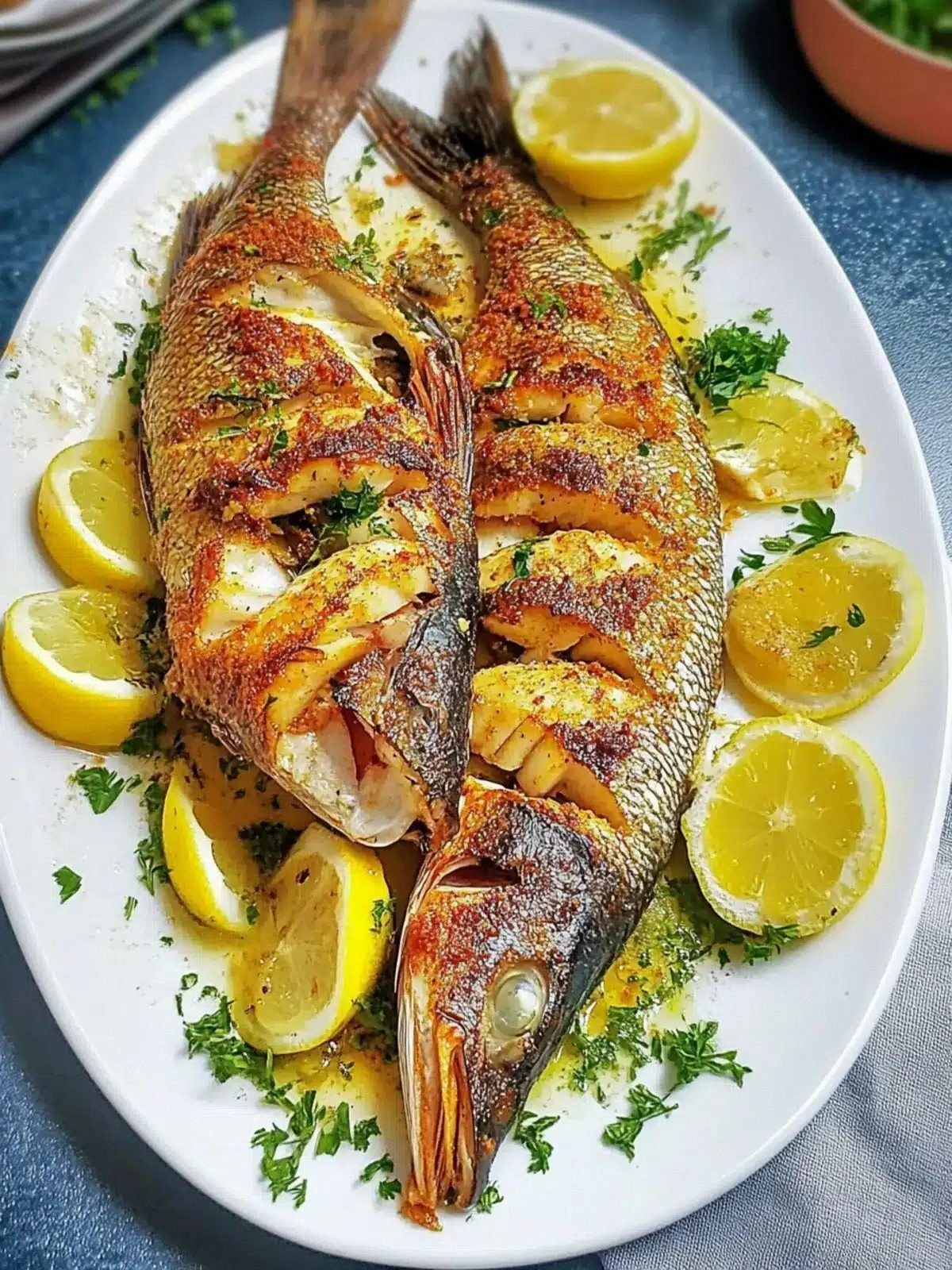
The Method — Step by Step
- Preheat and Prep: Turn your oven to 425°F (220°C). Line a baking sheet with parchment paper or a silicone mat. Place the snapper on the sheet, skin side down, and let it sit for a few minutes to allow the heat to settle. This step ensures even cooking and prevents sticking.
- Clean and Score: Rinse the fish under cold water, pat it dry with paper towels. Make diagonal slashes on both sides of the fish—about 4–5 cuts each. This not only helps the glaze penetrate but also allows the heat to penetrate more evenly, giving you a uniformly cooked fish.
- Season: Sprinkle sea salt and black pepper generously on both sides of the fish. Don’t be shy—seasoning is key to unlocking flavor. The salt draws out moisture and forms a flavorful crust, while the pepper adds a subtle bite that complements the herbs.
- Make the Glaze: In a small bowl, whisk together melted butter, garlic powder, Italian seasoning, paprika, lemon juice, and minced garlic. The butter acts as a binder, while the spices create a complex flavor profile that coats the fish like a velvet blanket. If you’re short on time, this glaze can be prepared in less than a minute.
- Apply the Glaze: Brush the glaze generously over the entire surface of the fish. Make sure the glaze reaches the edges and the cavity. Place a lemon slice inside the cavity to create steam and infuse the flesh with citrus aroma.
- Bake: Slide the sheet into the preheated oven. Bake for 18–22 minutes, depending on the size of the fish. The fish is done when the flesh easily flakes with a fork and the skin turns a golden brown. The edges should start pulling away from the fish, indicating a crisp skin.
- Rest: Remove the fish from the oven and let it rest for 5 minutes. This allows the juices to redistribute, ensuring a moist interior. While the fish rests, you can prepare a quick side of roasted vegetables or a light salad.
- Serve: Garnish with fresh parsley, a squeeze of fresh lemon juice, and an extra drizzle of melted butter if desired. Plate the fish on a warmed platter, surround it with your chosen sides, and serve immediately while the skin is still crispy.
That's it — you did it. But hold on, I've got a few more tricks that'll take this to another level…
Insider Tricks for Flawless Results
The Temperature Rule Nobody Follows
Many recipes recommend baking at 375°F, but a higher temperature of 425°F creates a crisp skin that’s impossible to resist. The heat causes the skin to puff up, creating a natural barrier that keeps the flesh moist. If you’re using a larger fish, lower the temperature slightly and extend the cooking time to avoid overcooking the interior.
Why Your Nose Knows Best
Don’t rely solely on the timer. The aroma of the fish will change as it cooks: a fresh, buttery scent at the start, followed by a caramelized, slightly sweet fragrance when the glaze is ready. Trust your nose; it’s a reliable indicator of doneness.
The 5-Minute Rest That Changes Everything
Letting the fish rest after baking might seem trivial, but it’s a game‑changer. The rest period allows the juices to redistribute, preventing them from spilling out when you cut into the fish. It also gives the glaze time to set, creating a glossy finish that looks as good as it tastes.
Use Fresh Herbs, Not Dried
Fresh parsley adds a bright, green burst that dried herbs can’t match. If you’re out of fresh parsley, use dried as a last resort, but be sure to add it at the end of cooking to preserve its flavor. A pinch of dried oregano can also complement the Italian seasoning for added depth.
Add a Splash of Water Before Reheating
If you need to reheat leftovers, drizzle a tiny splash of water over the fish before microwaving. This prevents the fish from drying out and keeps the glaze from becoming overly thick. Cover loosely to trap steam and preserve moisture.
Creative Twists and Variations
Mediterranean Medley
Swap the Italian seasoning for a blend of oregano, thyme, and rosemary. Add a handful of kalamata olives and sun‑dried tomatoes to the cavity for a Mediterranean flair. This version pairs beautifully with a side of couscous and a drizzle of olive oil.
Asian‑Inspired Zing
Replace paprika with a teaspoon of toasted sesame oil and add a splash of soy sauce to the glaze. Garnish with sliced green onions and a sprinkle of toasted sesame seeds. Serve over jasmine rice for a complete Asian‑style meal.
Herb‑Crunched Delight
Instead of brushing the glaze, coat the fish in a mixture of breadcrumbs, chopped parsley, and grated Parmesan. Bake until the crust is golden and crunchy. This gives a textural contrast that’s a crowd‑pleaser.
Citrus‑Honey Glaze
Add a tablespoon of honey to the butter glaze for a sweet, caramelized finish. The honey pairs wonderfully with the lemon’s brightness, creating a balanced sweet‑savory profile. Pair with roasted sweet potatoes for a comforting meal.
Spicy Kick
Incorporate a pinch of cayenne pepper or a sliced fresh jalapeño into the glaze. The heat complements the richness of the butter while adding a subtle burn that lingers. This version is perfect for those who love a bit of heat.
Storing and Bringing It Back to Life
Fridge Storage
Cool the cooked snapper completely, then wrap it tightly in plastic wrap and place it in an airtight container. Store in the refrigerator for up to 2 days. The glaze will firm slightly, but the fish remains moist if handled gently.
Freezer Friendly
Wrap the fish in foil and then in a freezer bag to prevent freezer burn. Freeze for up to 3 months. Thaw overnight in the refrigerator before reheating. This method preserves the texture and flavor remarkably well.
Best Reheating Method
Reheat in a preheated oven at 300°F (150°C) for 10–12 minutes, or until warmed through. For a quick microwave, drizzle a splash of water, cover with a damp paper towel, and heat on medium for 2–3 minutes. The small amount of water keeps the fish from drying out and restores the glaze’s glossy sheen.