It was a rainy Thursday, the kind of night when the kitchen lights flicker like fireflies and your fridge feels like a treasure chest. I had just burned a batch of cookies that were so charred they looked like the remnants of a meteor strike, and my craving for something sweet and tropical was louder than the thunder outside. I stared at the empty counter, thinking, "Maybe I should just order something." But then I remembered the half‑baked idea that had been simmering in my mind: a moist coconut mango cake that would make your taste buds do a happy dance. The moment I decided to give it a go, I knew I was about to create something that would not only satisfy my sweet tooth but also turn a kitchen mishap into a culinary triumph.
Picture the kitchen: a gentle drizzle against the window, the faint scent of citrus mingling with the rich aroma of melted butter, the rhythmic clink of a whisk against a mixing bowl, and the soft hum of the oven preheating. When you bite into the first slice, the cake’s interior is a cloud of coconut-infused moisture that melts in your mouth, followed by a burst of ripe mango that feels like sunshine on your tongue. The crust is golden, slightly crisp, but never dry, and the shredded coconut on top adds a subtle crunch that plays against the silky texture. The subtle tang of lime juice cuts through the sweetness, leaving a clean finish that makes you reach for another slice. The entire experience is a sensory symphony that feels like a tropical vacation in a single bite.
What sets this version apart from every other coconut mango cake you’ve seen on Pinterest or in a cookbook is its meticulous balance of moisture, flavor, and simplicity. I’ve taken the classic recipe, stripped away unnecessary steps, and introduced a few game‑changing tweaks: using coconut milk as the base liquid, folding in fresh mango puree for real fruit flavor, and adding a tangy lime kick that lifts the sweetness. The result is a cake that stays moist for days, has a velvety crumb that’s almost buttery, and delivers a mango burst that’s not overpowering but unmistakably present. I dare you to taste this and not go back for seconds, because once you bite, you’ll know what the word “mouthwatering” truly means.
This isn’t just another cake; it’s a confidence‑boosting, kitchen‑winning masterpiece that will have your friends asking for the recipe at every gathering. I’ll be honest— I ate half the batch before anyone else got a chance to try it, and my friends still ask if I’ve added a secret ingredient. Most recipes get this completely wrong by overmixing or using too much liquid, but here’s what actually works: gentle folding, precise measurements, and a touch of lime that keeps the batter from drying out. Picture yourself pulling this out of the oven, the whole kitchen smelling incredible, and the timer chiming with a sweet, tropical promise. And now, ready for the game‑changer? Let’s walk through every single step—by the end, you’ll wonder how you ever made it any other way.
What Makes This Version Stand Out
- Moisture: The secret to a cake that stays soft for days is the coconut milk and the careful folding of the batter. By adding the liquid last and mixing just enough, you preserve the tender crumb that feels like a cloud. This approach eliminates the dryness that plagues many coconut cakes, ensuring every slice is as fluffy as the first.
- Flavor: Fresh mango puree replaces dried fruit or jam, giving an authentic tropical punch that’s unmistakably real. The lime juice adds a bright counterpoint that keeps the sweetness balanced, creating a flavor profile that’s both bold and elegant.
- Texture: Shredded coconut on top adds a pleasant crunch, while the interior remains silky. The combination of butter and coconut milk creates a buttery richness that coats the palate like velvet.
- Simplicity: With only twelve ingredients, you can whip up this cake in under an hour, and you’ll still feel like a culinary wizard. The recipe’s straightforward steps make it approachable for beginners and a breeze for seasoned bakers.
- Make‑ahead: This cake can be prepared a day ahead, stored in the fridge, and reheated with a splash of water for that fresh-from-the-oven feel. The flavors meld beautifully over time, making it a great option for parties.
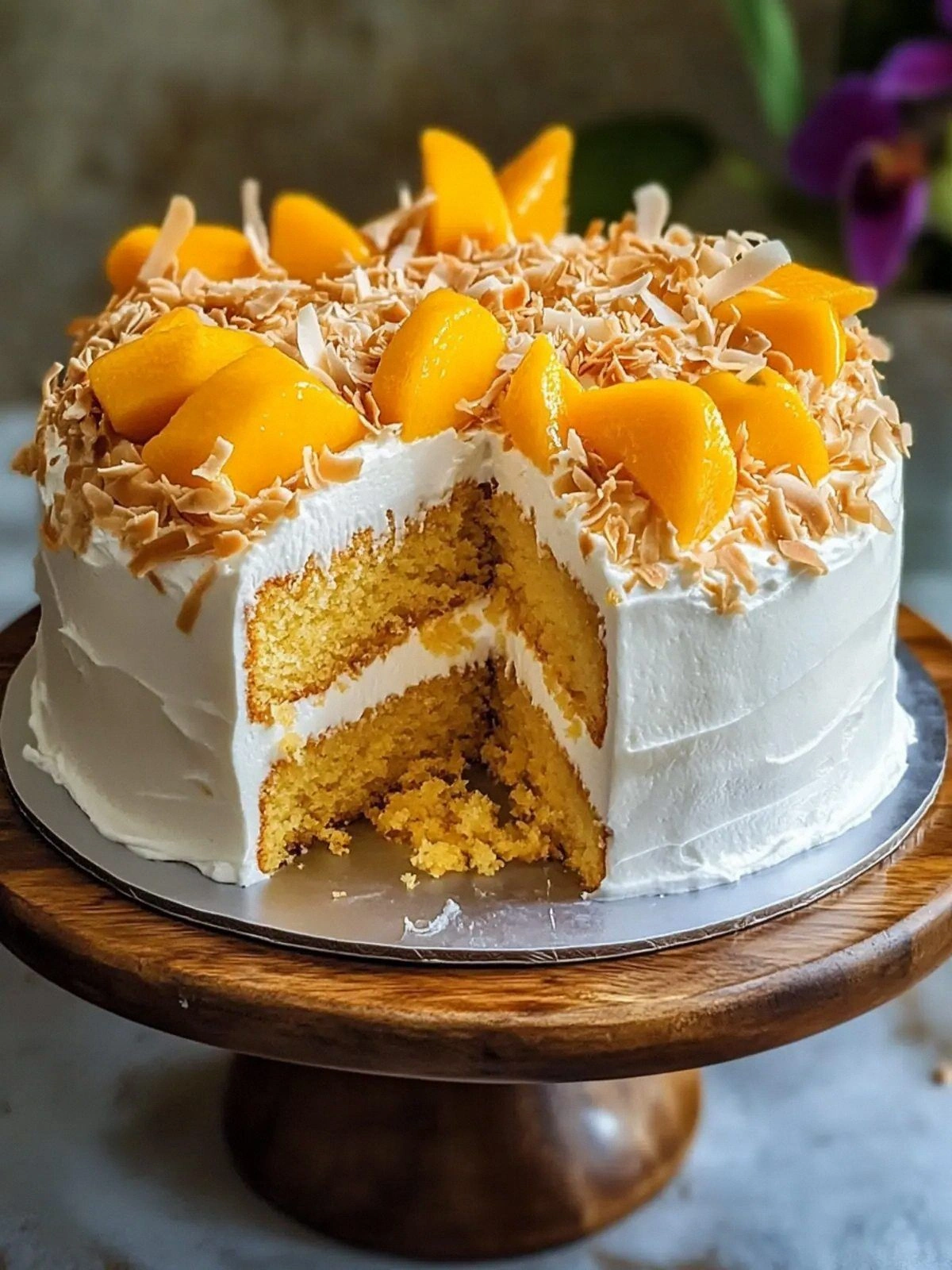
- Visual Appeal: The golden crust, the glossy coconut glaze, and the vibrant mango swirl create a dessert that looks as good as it tastes, turning any table into a tropical oasis.
Inside the Ingredient List
The Flavor Base
All-purpose flour and baking powder are the backbone of any cake, but here they’re the silent heroes that allow the coconut and mango flavors to shine without overpowering the batter. The flour provides structure, while the baking powder gives the cake that gentle lift, ensuring it rises beautifully in the oven. If you skip the baking powder, the cake will be dense and flat, losing the airy quality that makes each bite light.
The Texture Crew
Unsalted butter and coconut milk work together to create a moist, tender crumb that feels almost buttery. The butter adds richness and depth, while the coconut milk infuses the batter with a subtle tropical note. If you replace coconut milk with dairy milk, the cake will lose that signature coconut flavor and become less moist.
The Unexpected Star
Fresh ripe mangoes are the star that brings real fruit flavor to the cake. By pureeing them into the batter, you avoid the artificial sweetness of canned mangoes or mango jam. If you skip the mangoes, the cake will feel like a generic coconut cake, lacking the bright, juicy punch that makes it memorable.
The Final Flourish
Shredded coconut on top adds a delightful crunch and a burst of flavor that complements the moist interior. The lime juice provides a subtle acidity that brightens the overall taste, preventing the cake from feeling overly sweet. If you omit the lime juice, the cake will taste flat and the coconut flavor might dominate too strongly.
Everything’s prepped? Good. Let’s get into the real action and watch the magic unfold.
The Method — Step by Step
- Preheat the oven to 350°F (175°C). Line a 9-inch springform pan with parchment paper, ensuring it’s snug but not tight. The parchment will allow the cake to release easily, preventing a soggy bottom. This step is crucial for achieving that perfect golden crust.
- Whisk the dry ingredients. In a large bowl, sift together the flour, baking powder, and salt. Sifting removes lumps and ensures even distribution of leavening agents. A smooth dry mix guarantees a consistent rise and a tender crumb.
- Blend the wet ingredients. In a separate bowl, combine coconut milk, melted butter, sugar, vanilla, and lime juice. Whisk until the sugar dissolves completely, creating a silky liquid that will coat the flour evenly. The lime juice’s acidity also helps activate the baking powder slightly.
- Fold in the mango puree. Gently fold the freshly pureed mango into the wet mixture until fully incorporated. The mango adds a natural sweetness and a vibrant color that signals the tropical theme. Avoid over‑stirring to keep the batter light.
- Combine wet and dry. Pour the wet mixture into the dry ingredients and fold gently until just combined. The batter should be smooth but still have a few small lumps; this ensures a tender crumb. Over‑mixing here would activate the gluten too much and result in a dense cake.
- Prepare the batter. Pour the batter into the prepared pan and smooth the top with a spatula. Tap the pan lightly to release any large air pockets. The batter should spread evenly across the pan, creating a uniform surface.
- Bake until golden. Place the pan in the oven and bake for 30–35 minutes, or until a toothpick inserted in the center comes out clean. The edges will start pulling away slightly, signaling that the cake is done. Watch the color change; it should be a beautiful golden brown.
- Cool and finish. Let the cake cool in the pan for 10 minutes, then transfer to a wire rack to cool completely. Once cooled, dust the top with powdered sugar and sprinkle shredded coconut for that extra crunch. The finished cake should look glossy, fragrant, and inviting.
That’s it— you did it. But hold on, I've got a few more tricks that'll take this to another level. These insider tips will ensure your cake looks professional, tastes divine, and stays moist for days.
Insider Tricks for Flawless Results
The Temperature Rule Nobody Follows
Many bakers bake at the lowest setting, but the secret to a moist crumb is baking at a slightly higher temperature—350°F is ideal. This allows the exterior to set quickly, sealing in moisture while the interior continues to cook gently. If you’re using a convection oven, lower the temperature by 25°F to avoid over‑browning.
Why Your Nose Knows Best
During baking, the aroma will change from sweet to nutty to toasted coconut. Trust that scent; when it smells toasty, it’s time to pull the cake out. A friend once left it too long and ended up with a dry, caramelized cake that tasted like a burnt marshmallow.
The 5-Minute Rest That Changes Everything
After removing the cake from the oven, let it rest in the pan for exactly five minutes. This short pause allows the steam to redistribute, preventing the cake from collapsing or cracking. It also gives the frosting time to set if you decide to top it with a light glaze.
The Shredded Coconut Finish
For an extra crunch, toast the shredded coconut in a dry skillet over medium heat until golden. Toss the toasted coconut with a pinch of sea salt before sprinkling it on the cake. The toasted flavor adds depth and a satisfying texture that complements the moist interior.
The Lime Juice Trick
Adding lime juice not only brightens the flavor but also helps keep the batter from drying out. The acidity reacts with the baking powder, creating a subtle lift. If you’re allergic to citrus, substitute with a teaspoon of lemon juice for a similar effect.
Creative Twists and Variations
Tropical Coconut Lime Cheesecake
Swap the butter for cream cheese in the batter and fold in a tablespoon of lime zest. This gives the cake a richer, cheesecake-like texture while maintaining the coconut base. Serve with a drizzle of lime-infused honey for an extra zing.
Spiced Mango Coconut Cake
Add a pinch of ground cinnamon and nutmeg to the dry mix. The warm spices complement the mango’s sweetness, creating a comforting dessert perfect for cooler evenings. Garnish with chopped candied ginger for a festive touch.
Chocolate Coconut Mango Delight
Incorporate a handful of dark chocolate chips into the batter for a bittersweet twist. The chocolate pairs beautifully with the coconut, creating a decadent, chocolatey surprise with every bite. Finish with a dusting of cocoa powder for an elegant look.
Vegan Coconut Mango Cake
Replace the eggs with flaxseed meal mixed with water (1 tablespoon flaxseed + 3 tablespoons water per egg). Use a plant-based butter alternative and ensure the coconut milk is unsweetened. This version is fully vegan, yet still moist and flavorful.
Mango Coconut Ice Cream Topping
Serve the cake with a scoop of homemade mango coconut ice cream. The cold, creamy texture contrasts with the warm cake, creating a delightful temperature play. Top with toasted coconut flakes for a final crunch.
Storing and Bringing It Back to Life
Fridge Storage
Store the cooled cake in an airtight container in the refrigerator for up to five days. The moisture from the coconut keeps the cake fresh, and the flavors deepen over time. When ready to serve, let it sit at room temperature for 15 minutes for the best texture.
Freezer Friendly
Wrap the cake tightly in plastic wrap and place it in a freezer bag. It will keep well for up to two months. Thaw overnight in the refrigerator, then let it come to room temperature before serving.
Best Reheating Method
Reheat slices in a microwave at 50% power for 30 seconds, or warm them in a 350°F oven for 5 minutes. Add a tiny splash of water before reheating to steam the cake back to its original moistness. The result is a freshly baked feel, even after freezing.